Modern Alternative Popes 10: The Missionary Order for the Salvation of Souls

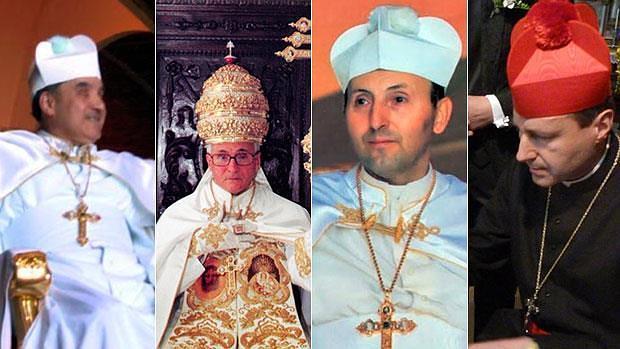
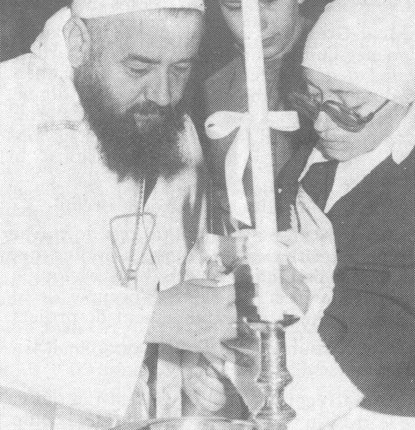
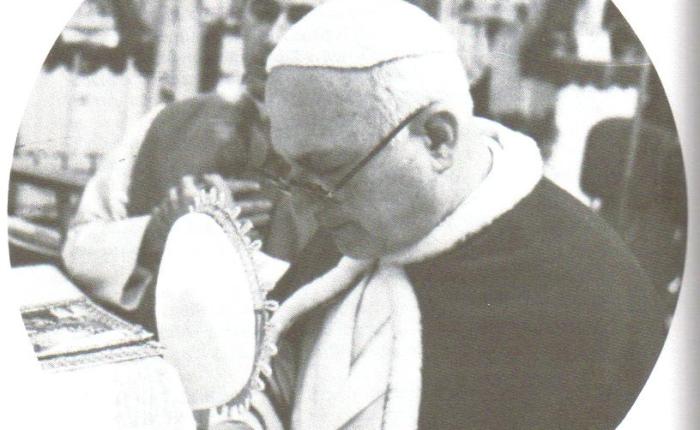
Valeriano Vestini (Valerian I, 1990-1995) was born Olinto Vestini, taking the name Valeriano when he joined the Capuchin order. He later became superior of the Mater Domini monastery in Chieti. In 1983, a local woman called Rita claimed to have dreams which featured Vestini as a representative of Padre Pio. The dreams included a divine command: that the group around her should work for the salvation of souls, joining forces with the seers of Lourdes, Fatima and Medjugorje. Rita left the group in 1989, and the role as the voice-box of heaven was taken over by Nicola Di Carlo and Alessandro Di Donato.


Continue reading “Modern Alternative Popes 10: The Missionary Order for the Salvation of Souls”

Modern Alternative Popes 4: The Legio Maria

Modern Alternative Popes 4: The Legio Maria

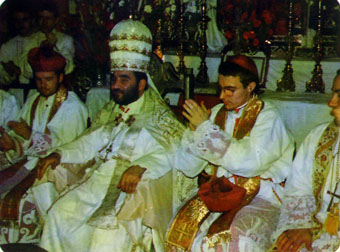
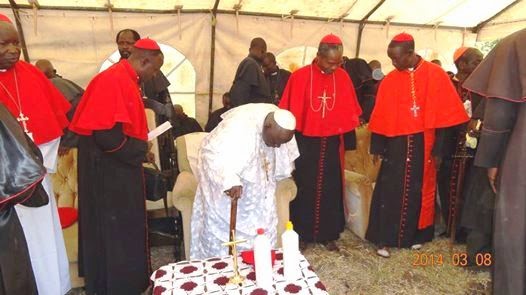
Without any doubt, the Legio Maria, founded in Kenya in the early 1960s, is the largest of the churches in this overview. Although it is very difficult to estimate the numbers of followers, some researchers state around one million followers, while some give even higher estimates. During its existence, it has had at least three popes. The founder, Simeo Ondeto could be included, too, but he was also considered the Messiah, and today they are two claimants to the Legio Maria papacy.

Continue reading “Modern Alternative Popes 4: The Legio Maria”

Modern Alternative Popes 2: Apostles of Infinite Love, France

Modern Alternative Popes 2: Apostles of Infinite Love, France

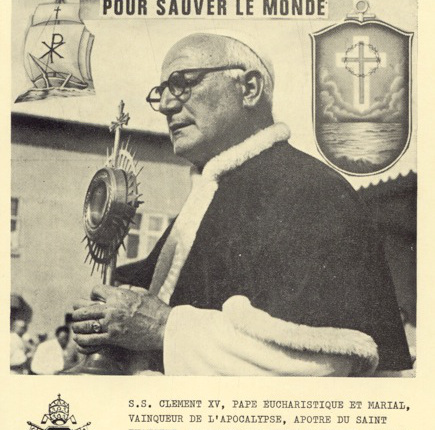
The relations between the popes related to the Apostles of Infinite Love is a complicated matter. The first pope, Clement XV, asserted that he from 1950 onwards assisted Pius XII and that he continued to support John XXII under his pontificate. To him, both Pius and John were true popes, though enemies in the Curia hindered them from acting freely. In short, they needed help from Pope Clement.

First with the election of Paul VI, in 1963, Clement claimed that he was the only true pope, moving the Holy See to Clémery, the small French town where he lived. In the late 1960s and early 1970s, the Apostles were divided into several groups, and a Canadian cardinal declared that he had been divinely chosen to replace the founder and took the name (John) Gregory XVII. Several other splinter groups appeared, and after Clement’s death in 1974, at least two other men have claimed to be his papal successor. Continue reading “Modern Alternative Popes 2: Apostles of Infinite Love, France”

Modern Alternative Popes 1: Introduction

Modern Alternative Popes 1: Introduction

This is the first of 24 posts on post-World War II alternative popes (“antipopes” from the perspective of the Roman Catholic Church). Here I give an overview of different kinds of post-Vatican II traditionalist groups, including sedevacantists, who believe that the pope in Rome is not the true pope. I also discuss two types of alternative popes: those who claim supernatural election (“mystically elect”) and those who have been chosen in some type of conclave (“conclavists”). This post will be a useful introduction to the following 20 posts on different alternative popes and religious groups.

Continue reading “Modern Alternative Popes 1: Introduction”

Clemente Becomes Pope

Clemente Becomes Pope

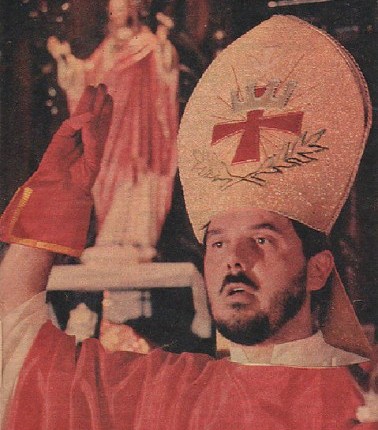
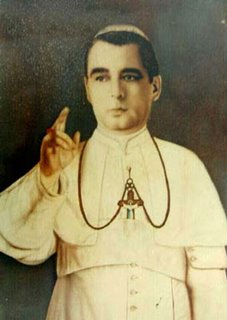
As we have seen, already in the beginning of the 1970s, Clemente Domínguez claimed that Pope Paul VI would be succeeded by both a true pope and an antipope. At that time, his claims were quite general, but later he stated that he would become the next pope after the death of Pope Paul, and that he would be named Gregory XVII. Heavenly messages from 1971 and 1972 asserted that due to the masonic and communist infiltration in the church, there would soon be a great schism. After the death of Pope Paul VI, the followers of the true pope would be forced “down in the catacombs”, as the heretics led by the antipope would persecute them (MC, messages February 8, April 5, September 27, 1971; March 9, May 9, and September 5, 1972). In 1976, the messages became even more concrete and it is implied that there would be a time when the Catholic Church would not be Roman anymore (MC, messages April 4 and August 4, 1976).

Continue reading “Clemente Becomes Pope”

Schism at Palmar: Palmarian Bishops

Schism at Palmar: Palmarian Bishops

Being successful in their fund raising endeavors, in 1974, Clemente and Manuel could eventually acquire the apparition site: the 15,000 square meter estate of Alcaparrosa and could thus physically control the site and develop the cult as they wished. After the purchase, they built a somewhat more elaborate shrine. It was a kind of hangar, covered in plastic, where images of Our Lady, The Holy Face, St. Joseph, Padre Pio and Saint Ferdinand were kept. They also constructed a high wall around the church compound, and housing for pilgrims was bought or built nearby (Alfaro 1975; Vidal 1976:103; El País May 12, 1976; Molina 2006:71-78, 100-04).

Continue reading “Schism at Palmar: Palmarian Bishops”

The Official Church Denounces the Appartions at Palmar de Troya

The Official Church Denounces the Appartions at Palmar de Troya

The apparitions received no clear support from the local parish priests who visited Palmar de Troya on a regular basis, though one of the nearby curates publicly stated that that something “strange was going on in Palmar de Troya,” and he did not know what to believe. However, another, younger parish priest was more critical, but the basic way of handling the stories was silence (ABC 27 April 1968). Thus, although there was some initial clerical interest, or at least bewilderment, the Palmarian seers could not rely on local ecclesiastical support.

Continue reading “The Official Church Denounces the Appartions at Palmar de Troya”

Spreading the News and Getting Money/ Apocalyptical and Traditionalist Contexts

Spreading the News and Getting Money/ Apocalyptical and Traditionalist Contexts

During the early 1970s, the Palmarian seer par excellence, Clemente Dominguez received new heavenly messages on a continuous basis. They were recorded by Manuel Alonso, written down, copied and distributed. Some of them were translated into English, French and German as part of the diffusion of the news beyond Spain’s borders. A newsletter, Ecos del Palmar, was printed from 1972 onwards. An obvious reason for the documentation was to spread the news to as many people as possible, looking upon them as a final word of warning from heaven. The group around Clemente regarded most Catholic bishops as apostates, whom together with the large majority of nominally Catholic priests, female religious and laypeople, needed to convert (Alonso and Canales 1976:145-58).

Continue reading “Spreading the News and Getting Money/ Apocalyptical and Traditionalist Contexts”