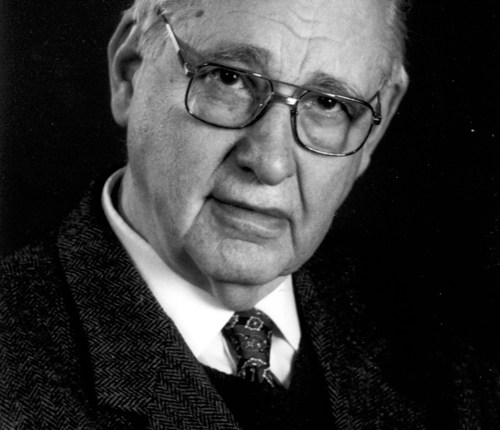
Magnus Mörner

Magnus Mörner

“Conversación con Magnus Mörner”

Carlos Contreras & Magnus Lundberg 

Publicado en Histórica, vol. XXXII:2 (2008)

Una entrevista de 2009 con el destacado historiador sueco Magnus Mörner (1924-2012), conocido internacionalmente por sus muchos estudios latinoamericanistas.

El artículo completo se encuentra aquí.

See also my obituary in Hispanic American Historical Review 92:4 (2012) here

Requiescat in pace
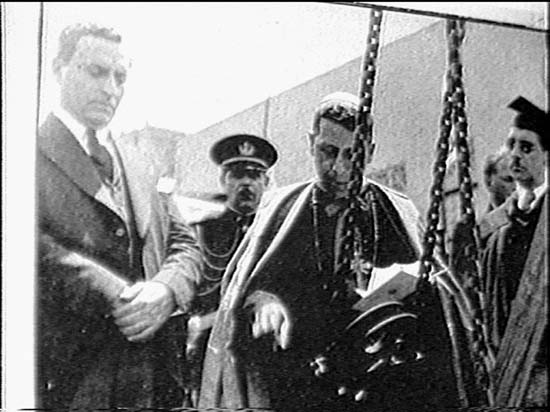
Church and State in Costa Rica

Church and State in Costa Rica

“Overcoming or Silencing Conflicts: The Catholic Church and the Building of the Costa Rican Welfare State”

Magnus Lundberg

Originally held as a lecture at the University of Groningen in 2006; lightly revised in 2016

In this article, I briefly analyse the role of religion in the construction of the Costa Rican society from the 1930s onwards. I focus on the relations between the Roman Catholic Church and the Costa Rican government. It is always difficult to speak about the position of the church. To avoid hasty generalisations, I will therefore limit myself to the public statements made by the Costa Rican archbishops. Even more concretely, I am interested in the archbishops’ concern with what usually is called la cuestión social – the social issue. That is, their treatment of themes such as poverty and inequality.

The text is available here

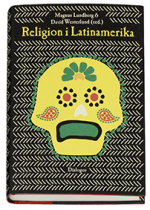
Religion i Latinamerika

Religion i Latinamerika

Religion i Latinamerika

Beställ ett exemplar här

Some Good Reads During 2015

Some Good Reads During 2015

Here are some titles I have enjoyed during 2015 and which have little to do with my main research.


Caryl Phillips, Crossing the River

V.S. Naipul, The Middle Passage: Impressions of Five Colonial Societies

Judith Schalansky, Atlas över avlägsna öar: Femtio öar som jag aldrig besökt och aldrig kommer att besöka

Judith Schalansky, Giraffens hals: En bildningsroman

Anna Gavalda, Tillsammans är man mindre ensam

Emile Ajar, Med livet framför sej

Haruki Murakami, 1Q84, del 1-3

Lorena Macianskaite (red.), Litauen berättar: Att avregistrera ett spöke

Marie-Elena John, Unburnable

Hubert Wolf, The Nuns of Sant’ Ambrogio

Gerard Russell, Heirs of the Forgotten Kingdom

Continue reading “Some Good Reads During 2015”

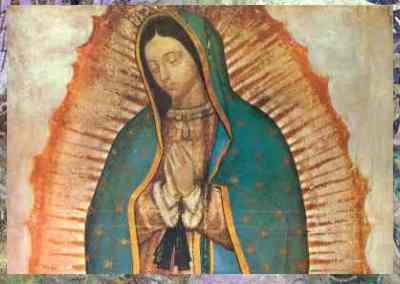
Archbishop Montúfar and Guadalupe

Archbishop Montúfar and Guadalupe

“The Archbishop and the Virgin: Alonso de Montúfar and the Early Cult of Our Lady of Guadalupe”

Magnus Lundberg 

Article published online in 2015 (but based on a chapter of my doctoral dissertation, defended in 2002).

In this article, I critically assess a number of documents related to the cult of Our Lady of Guadalupe at Tepeyac in the mid-sixteenth century. It seeks to counteract the many bad scholarly contributions on Guadalupe, published in both theologically “conservative” and “radical”/”contextual” circles.

It is, of course, interesting to study how Guadalupe has been interpreted throughout the ages and what role she plays today. Still, to establish facts about the origin of a cult of the Virgin of Guadalupe requires a very close assessment of the existing sources. There are so many farfetched interpretations of documents (and “silences”) that have been made into truths and there are even fabricated sources that support certain ideological views. Thus, a source critical study of a very traditional kind can do much good.

In the documents that without a doubt can be dated to Alonso de Montúfar’s time as archbishop of Mexico (1554-1572), I have not found any foundation for the story about Juan Diego and Bishop Zumárraga that, at least since the 1640s, has been associated with the cult. Still, there are indications that at least an outline of story of about the miraculous origin of the image and the direct imprint of the Virgin on an indigenous man’s cloak, was known by the 1610s or 1620s (but that will be the subject of another article)

Continue reading “Archbishop Montúfar and Guadalupe”

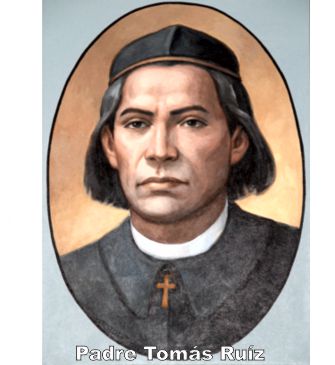
Clero indígena

Clero indígena

“El clero indígena en Hispanoamérica: De la legislación a la implementación y práctica eclesiástica”

Magnus Lundberg

Articulo publicado en Estudios de Historia Novohispana 38 (2008)

En este artículo se estudia la formación de un clero indígena en Hispanoamérica durante la época colonial. Usamos fuentes primarias, pero el artículo también pretende analizar la rica historiografía que existe sobre el asunto. Revisamos la legislación eclesiástica y particularmente los decretos de los concilios provinciales del siglo XVI, pero también las opiniones de teólogos y juristas. Además tratamos la implementación de estas leyes y la inclusión de un limitado pero creciente número de hombres indígenas en el sacerdocio desde la segunda parte del siglo XVII hasta fines de la época colonial.

El texto completo se encuentra aquí: