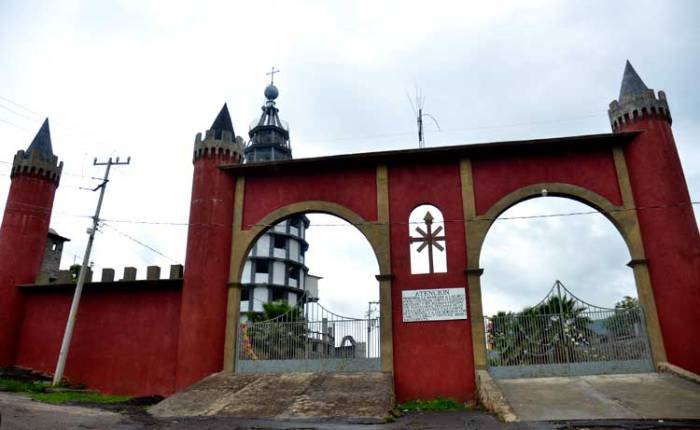
Genom åren har jag sysslat en hel del med katolsk traditionalism, speciellt i den spanskspråkiga världen. 2015 skrev jag en kort artikel om en traditionalistisk kommunitet, en “helig stad”, som ligger i provinsen Michoacán i Mexiko och benämns Nueva Jerusalén, Nya Jerusalem. Den har sin grund i en serie uppenbarelser av jungfru Maria och en rad andra helgon från 1973 och framåt. Kommuniteten har många gånger varit skådeplatsen för, ibland våldsamma, sammandrabbningar mellan olika schatteringar och grupper av personer som ledarna uppfattar som heterodoxa har drivits ut. Trots detta har inte polismyndigheten eller andra delar av det mexikanska samhället ingripit.
Testimony by a former Palmarian nun
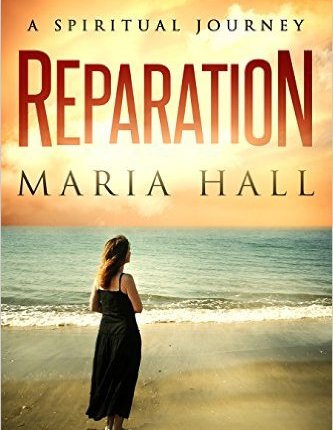
Maria Hall
Reparation: A Spiritual Journey
Haven Pablishing, 2015
Maria Hall is from Auckland, New Zealand. After some time in a Roman Catholic order in the late 1970s, she spent eight years as a nun in the Palmarian Church, a religious group which by that time had its hadquarters in Seville and Palmar de Troya in Spanish Andalusia. It is a very closed group with roots in the Roman Catholic Church, which has its own pope and has developed increasingly different teachings. Maria Hall left the Palmarians in 1990. She tells her life story in her new book Reparation: A Spritual Journey, which is the first longer text, written by a former Palmarian nun.
Having read the book, I wrote a message to her, parts of which I publish here:
“I was deeply moved when reading your book: Reparation, a spiritual journey. It is very interesting to see how life can turn out with or without our active choices.
Reading about your time in the Roman Catholic convent, I, of course, recognize the Catholic culture of silence and secrecy, and how relatively little women religious are valued by church authorities.
—
The life in Palmar, as you describe it, feels so claustrophobic. There seemed to be very little charity within the order and a lot of focus on suffering and reparation. Sleep-deprivation, too much or too little food, very hard work, and the enormous amount of prayers and other pious practices make for a very tough life. I also note the almost total invisibility of Pope Gregory, and that Father Isidoro María really was the puppet master Continue reading “Testimony by a former Palmarian nun”
Bibliography on the Palmarian Church
Here is a select bibliography of published works on the Palmarian Catholic Church.
Alonso, Javier & Rafael Canales. 1976. El Palmar de Troya: Festival del integrismo. Madrid: Sedmay Ediciones.
Barrios, Manuel & María Teresa Garrido Conde. 1976. El apasionante misterio del Palmar de Troya. Barcelona: Planeta.
Beltrán y Bachero, José Carlos. 1989. “Unerlaubte bzw. ungültige Priester und Bischofsweihen in El Palmar de Troya.” Pp. 419-433 in Ius et historia: Festgabe für Rudolf Weigand zu seinem 60 Geburtstag. Würzburg: Echter.
Cadoret-Abeles, Anne. 1981. “Les apparitions du Palmar de Troya: Analyse antropologique d’un phénomène religieux.” Mélanges de la Casa de Velázquez 17, 369-378.
Cebolla López, Fermín. 1976. El vidente ciego: Cisma sin teólogos en El Palmar de Troya. Bilbao: Editorial CLA.
Garrido Vázquez, Moisés. 2004. “El Palmar de Troya: 35 años de cisma.” Chapter 6 in El negocio de la Virgen, Madrid: Ediciones Nowtilus.
Garrido Vázquez, Moisés. 2008. “El Palmar de Troya: Cuatro décadas de integrismo mariano”, Misterios y fenómenos insólitos 84, 4-12. Accessed from on 12 August 2015
Gómez Burón, Joaquín & Antonio Martín Alonso 1976. El enigma de El Palmar de Troya, Barcelona: Editorial Personas.
Hall, Maria. 2015. Reparation: A Spiritual Journey, Haven Publishing, 2015.
Kristen väldoft och stank
“En doft av helighet”
Magnus Lundberg
Föreläsning vid Vetenskapsrådets kvartalsseminarium, 7 november 2014 med temat ”Dofters betydelse”
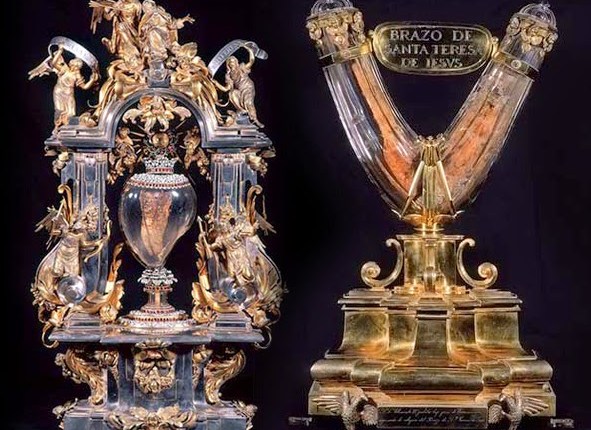
Dofter och lukter av många slag har faktiskt en central roll i den kristna historien, både som metaforer och faktiska dofter. Jag tar min utgångspunkt i helgonberättelser om medeltida och tidigmoderna kvinnor från Västeuropa och det spanska Amerika. De biografier som skrevs om dem behandlade deras liv, dygder, död i helighet och ofta mirakler efter döden. Helgonbiografier är en genre där imitation var vanligare än originalitet, och variationer på samma tema återkommer ofta.
Inledningsvis kommer jag att i ganska stor detalj beskriva en kvinnas doft. Därifrån kommer jag att följa vällukten framåt och bakåt i tiden för att försöka förstå vad det är som luktar och hur det dofta
Texten som föreläsningen utgick från kan läsas här
Föreläsningen spelades också in av Utbildningradion och kan ses här
Alonso de la Mota y Escobar, Obispo de Puebla
“Alonso de la Mota y Escobar: Ambición y santidad en la Nueva España, Siglos XVI y XVII”
Magnus Lundberg
Publicado in: Lillian von der Walde & Mariel Reinoso (eds.), Virreintos II, México: Editorial Grupo Destiempos, 2013
Hijo de conquistador, nacido en la ciudad de México, Alonso de la Mota y Escobar (1546-1625) hizo una carrera eclesiástica encomiable durante las últimas décadas del siglo XVI y primeras del XVII. Con una movilidad poco común, ocupaba puestos altos en cuatro de las diócesis novohispanas: Michoacán, México, Guadalajara y Puebla, primero como deán, después como obispo, siendo por ende el primer criollo novohispano elevado al rango episcopal.
Aparte de un breve epílogo, este estudio se divide en cuatro partes: la primera se centrará en los lazos familiares de Mota y su formación académica, hasta su ordenación sacerdotal; en la segunda parte examinaremos su carrera eclesiástica en tres cabildos eclesiásticos. El propósito de la tercera parte es estudiar su promoción a varios episcopados y su tiempo como obispo de Guadalajara y Puebla, particularmente sus visitas eclesiásticas, mientras que el objetivo de la última parte pretende analizar los elogios póstumos al obispo, donde se presenta como un prelado ideal y aún como un santo. Rasgos de la biografía de Mota y Escobar y su obra aparecen en algunas obras antiguas y modernas, pero aparte de unas excepciones reseñables, como las investigaciones de John Frederick Schwaller, mucho de lo que se ha escrito incluye errores y aserciones sin mucho fundamento. Por ello, merece la pena hacer un estudio más detallado de este interesante personaje.
Catholic Archives
“Roman Catholic Archives in Latin America: Status Quaestionis”
Magnus Lundberg
Published in SMT: Swedish Missiological Themes/ Svensk Missionstidskrift 95:1 (2007) – Special issue on Archives, Societal Amnesia and Survival.
The aim of this article is to give a brief overview of the current status of Roman Catholic archives in Latin America. It is an immense subject which hardly can be satisfactorily treated in a brief article. Here, I will therefore specifically focus on the case of Mexico. However, it should be indicated that the Mexican case is not entirely representative, as the current status of the Catholic archives there is better than in most other places in Latin America. It is, however, a good example of what can be done.
Magnus Mörner
“Conversación con Magnus Mörner”
Carlos Contreras & Magnus Lundberg
Publicado en Histórica, vol. XXXII:2 (2008)
Una entrevista de 2009 con el destacado historiador sueco Magnus Mörner (1924-2012), conocido internacionalmente por sus muchos estudios latinoamericanistas.
El artículo completo se encuentra aquí.
See also my obituary in Hispanic American Historical Review 92:4 (2012) here
Requiescat in pace
Parish Life in Colonial Mexico
Magnus Lundberg
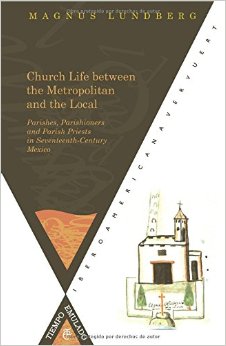
Church Life between the Metropolitan and the Local: Parishes, Parishioners, and Parish Priests in Seventeenth-Century Mexico,
Orlando, FL: Vervuert & Iberoamericana, 2011, 278 pp.
Church Life between the Metropolitan and the Local is a study of parishes, parishioners and parish priests in central Mexico during the first half of the seventeenth century. Using a number of different genres found in archives and libraries on both sides of the Atlantic, the book gives a multifaceted picture of the parish life. It addresses metropolitan norms for the ministry as well as priestly and indigenous interpretations of the day-to-day life in the local church.
Throughout the book particular emphasis is put on the interface between the indigenous parishioners and their parish priests, thus contributing to a closer study of the slow-moving processes of religious indoctrination and religious change in central Mexico a century or more after the Conquest.
Here you may order the book and read extracts and reviews.
Here you find more extracts from the book.
Mission Sudies in Sweden, 1910s-1930s
Gustaf Lindeberg and the Place of Academic Mission Sudies in Sweden, 1910s-1930s
Magnus Lundberg
Chapter published in: Carine Dujardin & Claude Prudhomme (eds.), Mission & Science: Missiology Revisited/Missiologie revisitée, 1850-1940, Leuven: Leuven University Press, 2015.
Academic interest in missions increased in many parts of the world following the 1910 Edinburgh Conference. Scandinavia and Sweden were no exceptions. At that time, there were only two major universities in Sweden: Lund and Uppsala. Both universities had their own theological faculty and to some extent they formed two separate worlds without much cross-fertilization. In this article, I focus on the place and role of academic mission studies at Lund University in the early decades of the twentieth century, which was more or less equivalent to the work of Gustaf Lindeberg (1878-1961). He will thus be at the centre of our attention.
In 1918, Lindeberg became the first Swede to defend a doctoral dissertation on a purely missiological subject. After completing his doctorate, he became a lecturer in mission history at Lund University. A prolific, if perhaps not very original author, Lindeberg published a dozen monographs and several hundred articles on mission-related subjects, all of them written in Swedish. Most of his publications were not intended for an academic audience, but a more general public. In this article, I shall therefore emphasize Lindeberg’s role as an active populariser of academic mission studies.
The full text is available here
Extracts of the whole book is found here
Church and State in Costa Rica
“Overcoming or Silencing Conflicts: The Catholic Church and the Building of the Costa Rican Welfare State”
Magnus Lundberg
Originally held as a lecture at the University of Groningen in 2006; lightly revised in 2016
In this article, I briefly analyse the role of religion in the construction of the Costa Rican society from the 1930s onwards. I focus on the relations between the Roman Catholic Church and the Costa Rican government. It is always difficult to speak about the position of the church. To avoid hasty generalisations, I will therefore limit myself to the public statements made by the Costa Rican archbishops. Even more concretely, I am interested in the archbishops’ concern with what usually is called la cuestión social – the social issue. That is, their treatment of themes such as poverty and inequality.