Almost four years ago, I co-authored the book Giuseppe Maria Abbate: The Italian-American Celestial Messenger with James W. Craig. At that time, we believed that essentially all archival material related to Abbate and his New Jerusalem Catholic Church of the Celestial Messenger had been destroyed in the early 1990s.
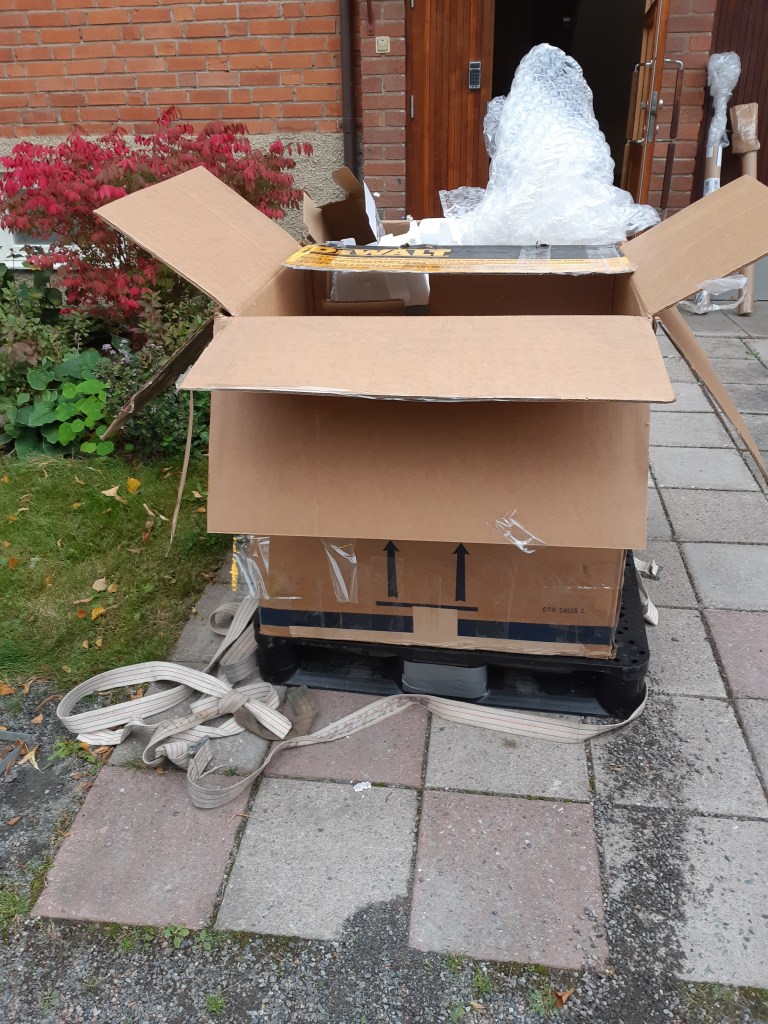
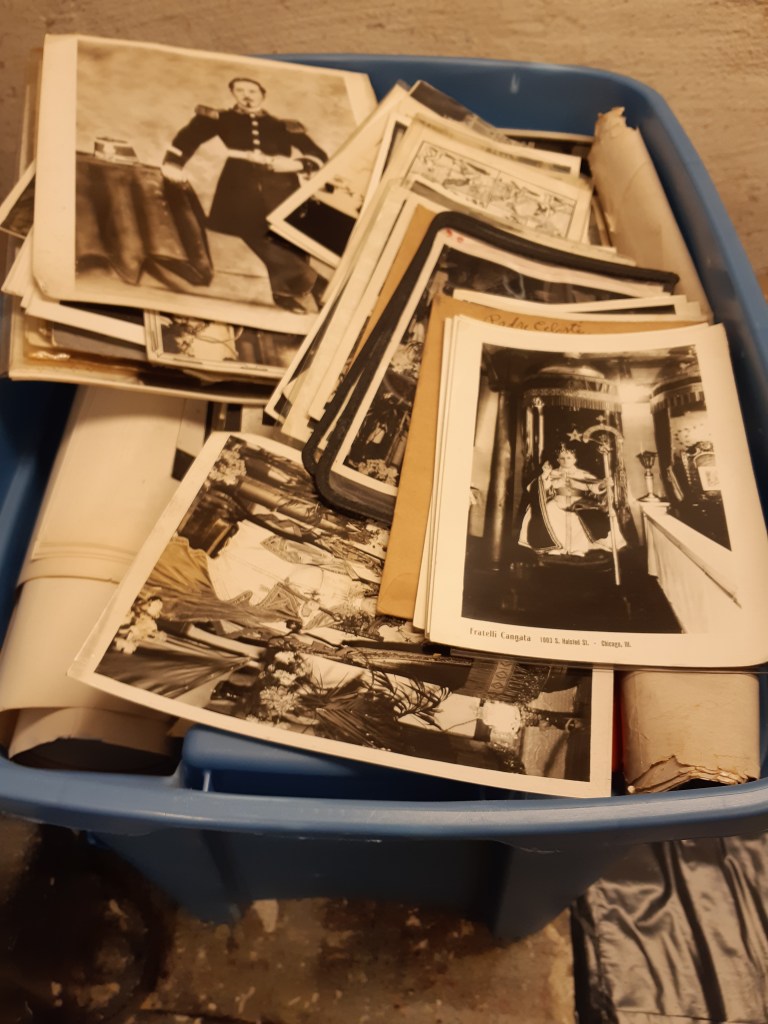
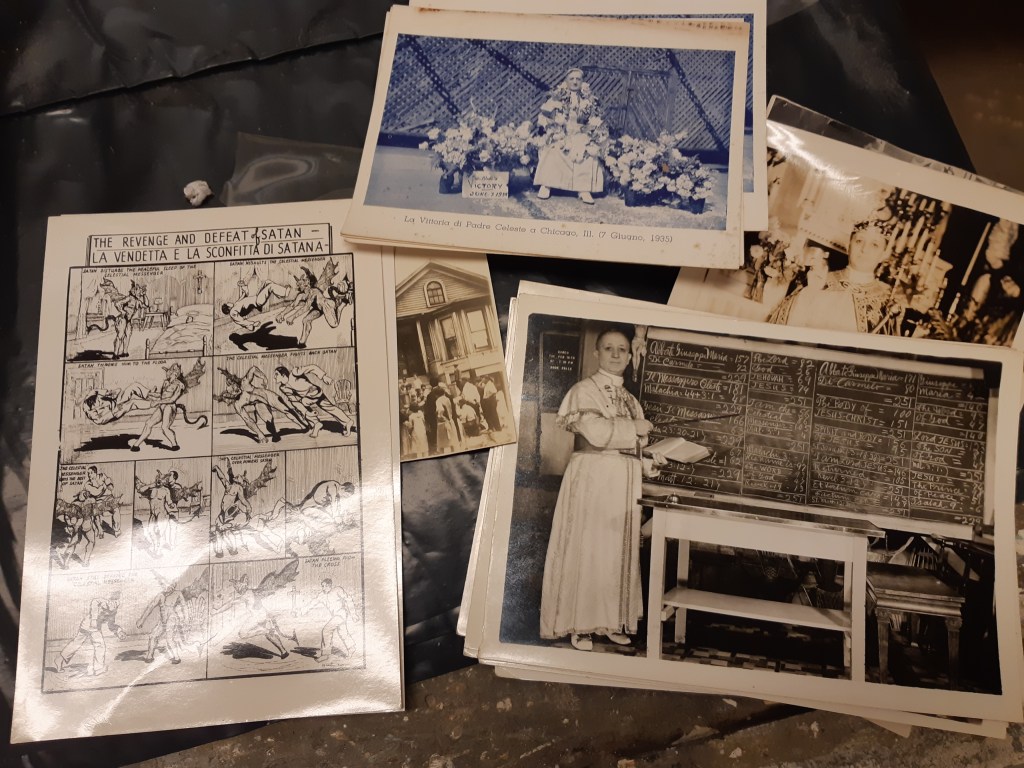
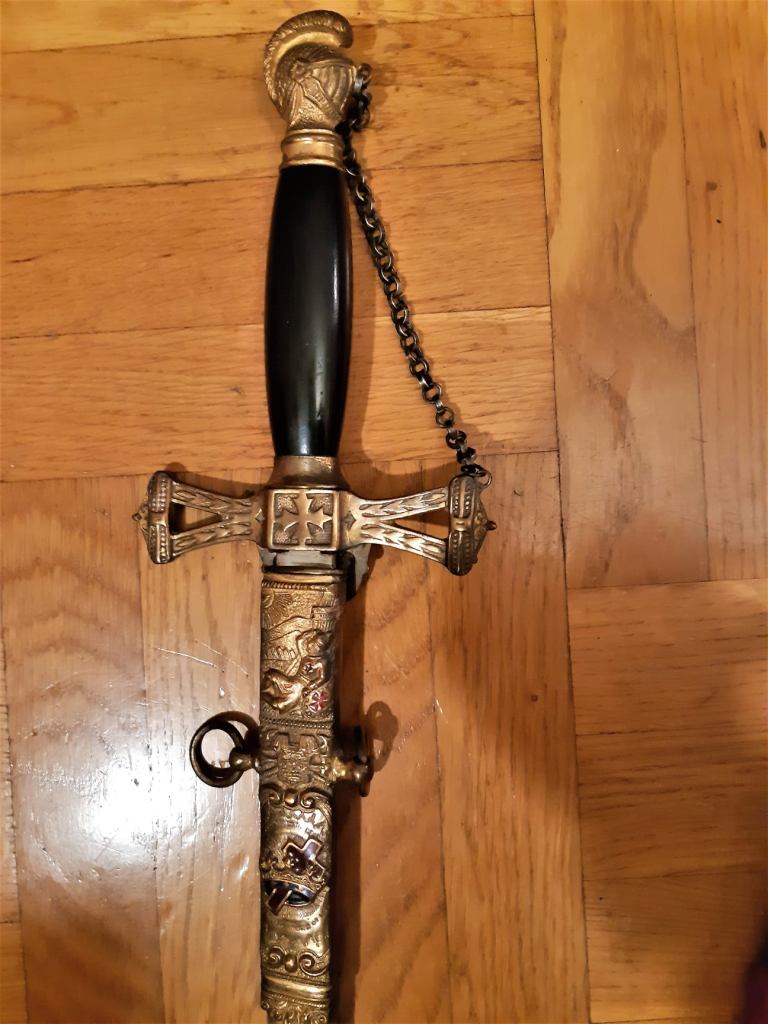
However, a sizable collection, once part of the church archive, has recently appeared. It includes publications, documents, photos, and objects. Not even the official publications, such as the L’Araldo magazine, are found in any research library I know. Thus, the collection contains unique materials and will serve as a basis for further studies on Abbate and his church. Currently, the archive is stored with me, and I’m preparing an article about the foundation and early development of the church. Hopefully, other studies will follow. In the near future, I will publish a selection of reproductions of photos and pictures of objects from the collection on this website. Below, you will find a few images of the collection before I started organizing it.
The New Jerusalem Church of the Celestial Messenger was a religious group based in Chicago that existed from the early 1910s to the early 1990s. However, it is debatable when it became a formalized religious group and when and if the church formally ended its activities, as the administrative and jurisdictional particulars are complex. From the early 1910s to the early 1960s, Sicilian-born Giuseppe Maria Abbate (1886–1963), the founder and church leader, claimed to be a celestial messenger – Il Messagero Celeste – and later, God reincarnate, the Celestial Father – Padre Celeste. By his side was a girl named Graziana, who was believed to be the reincarnation of the Virgin Mary.
Nevertheless, the records found in this collection do not have the character of a “complete archive” that grew organically from the activities of the New Jerusalem Church of the Celestial Messenger/Sacred Heart of Jesus church and parish. Instead, it includes well-selected parts of the more substantial archive destroyed in the early 1990s. These parts were rescued shortly before the purge.
The Church of the Celestial Messenger was formally founded in 1917 when it acquired a building in downtown Chicago that would house the Sacred Heart church. The entity received official status in the State of Illinois in 1919. At its height, it had some 500 members. However, by the late 1920s onwards, the number of adherents oscillated between 200 and 300. Over time, the church established two religious orders, one for females and one for males, known as the Order of Our Most Blessed Lady, Queen of Peace Reincarnated, and the Order of the Celestial Messenger, respectively. Abbate did not ordain more than one priest in 1919, but that priest soon left the church. Still, from the 1920s onwards, priests from different independent Catholic groups regularly said Mass in the Sacred Heart church.
At his death in 1963, Abbate had not appointed a successor, and he gave the Abbess of the Order the responsibility to find one. From 1965 onwards, the Sacred Heart parish, then located in northern Chicago, and the newly established mission in Wheaton, Illinois, were pastored by Archbishop John E. Schweikert (1924‒1988) of the North American Old Roman Catholic Church. In a sense, the parish belonged to both the New Jerusalem Church of the Celestial Messenger and the North American Old Roman Catholic Church. Still, the Abbess hesitated to make Schweikert Abbate’s formal successor.
Eventually, in 1968, Schweikert received this office after taking an oath before the abbess, confessing that Abbate’s miracles were genuine and even that he was a “supernatural being.” After taking this oath, Schweikert became Santo Padre Maria Michael, Abbate’s successor and the sole trustee of the church. Still, he seems to have worked towards making the congregation more orthodox. However, records, photos, and objects related to Abbate abounded in the parish and convent premises, including an altar in the chapel featuring him and the reincarnated Virgin Mary.
Shortly before he died in 1988, Schweikert consecrated Theodore Rematt (1945–2016) and made him his successor. No oath was involved, nor were the nuns or the congregation. There had been conflicts between the Abbate believers and Schweikert. Though Schweikert seemed to be diplomatic, their beliefs differed. The diplomatic approach would not last during Rematt’s leadership.
When taking over the responsibility, Bishop Rematt did not know that most of the faithful believed in the reincarnate Celestial Father; he thought it was a more ordinary independent Catholic parish. In 1989, however, Rematt became aware of this situation. After receiving a phone call, he found hidden documentation that led him to understand the situation and become very upset.
Following his discovery, there were severe clashes between the archbishop and the Abbate believers in the congregation (there were others, too). Excommunications and legal processes ensued between 1990 and 1995. Rematt could claim that he was the sole trustee of the church, ironically stating that he was the lawful successor of Abbate, while the Abbate believing parishioners thought that they, as a community, had not had their say and that Schweikert could not name a successor at his own, but needed the community’s, basically the nuns’ authorization and that Rematt required to take an oath of obedience to the teachings of Abbate, which, of course, wouldn’t happen. As the sole trustee, Rematt won the legal battles.
After discovering the history, Rematt decided to eradicate the memory of Abbate from his parish. He went through the church premises and collected all Abbate-related records, images, and objects he could find. At first, Rematt intended to give a researcher access to the written material, but eventually sent it to destruction. At this time, he also sold some items of monetary value, including one of Abbate’s crowns.
Still, many documents escaped destruction; those that now constitute the collection in my possession. They partly came from the archives found in the parish and convent, and probably also from individual adherents. Having been rescued, they were taken care of in a member’s home. The documents do not seem to be randomly amassed. Most documents are central to understanding Abbate’s biography, self-understanding, supernatural claims, miracles, and persecutions, i.e., legal processes. However, the collection also includes a stock of propaganda material, including leaflets, posters, and, not least, photographs.
The majority of the records – both originals and copies – date back to the Abbate era. Still, there are post-Abbate photos and documents, including transcriptions of extended interviews with Sister Bernadette Maria (1925–2020), the youngest nun in Abbate’s order, who was about to be evicted from the convent at this time.
For some 25 years, the collection remained in the custody of an adherent. In 2017, a Chicago antique dealer encountered the records and objects in a garage and bought them as part of an estate. At the time, he contacted institutions that should have had an interest in the material, but without success. In the fall of 2021, when he moved his business to a new location, the antique dealer reencountered the material. Searching for information about the Celestial Messenger on the internet, he found our book. Subsequently, he contacted me, who, with the help of the Department of Theology, Uppsala University, acquired the collection.
The records were in disorder, basically thrown down into eleven large boxes. There was hardly any traceable internal order. To be useful for further studies, I had to organize the contents systematically. Moreover, I had to take steps to preserve the long-term conservation of the collection. In the first phase, I removed all the plastic files and folders, where most records were kept, and disposed of paper clips and other metal materials that had already damaged the material and risked causing even more significant damage. Some of the plastic was heavily affected by mold, and some of the metal was affected by rust. After taking these precautions, the records are generally in fair condition, although they are affected by moisture. Finally, I organized the documents in a basic thematic order, dividing them into 17 volumes, which included folio-sized archival boxes, rolls, and larger boxes.
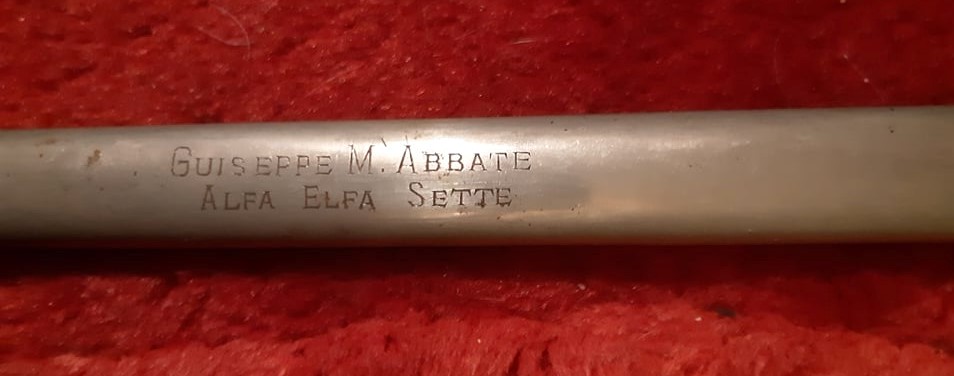
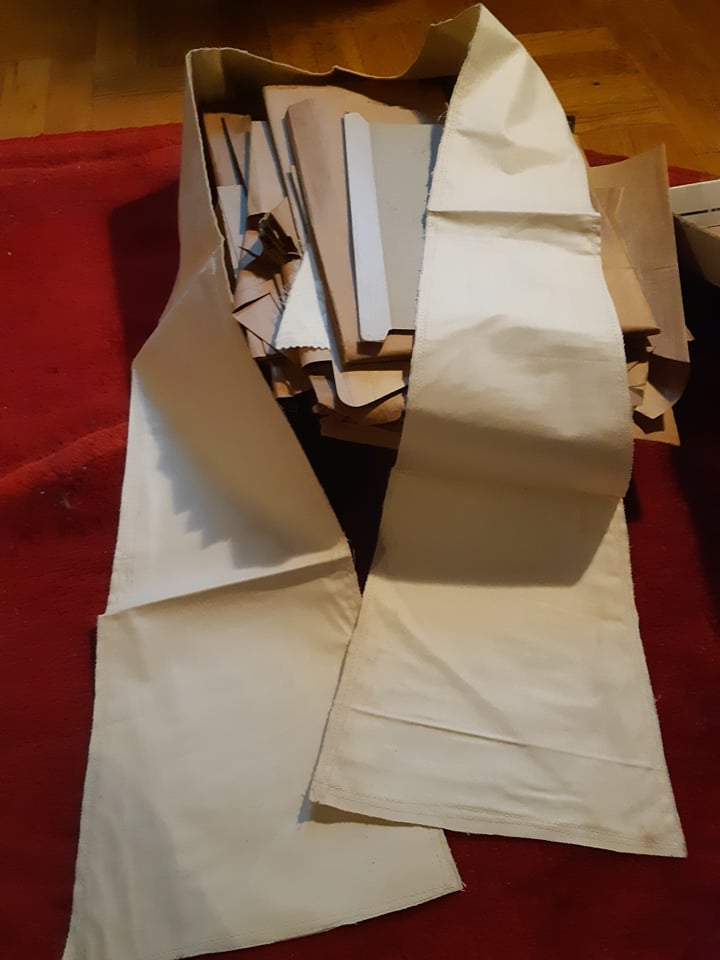
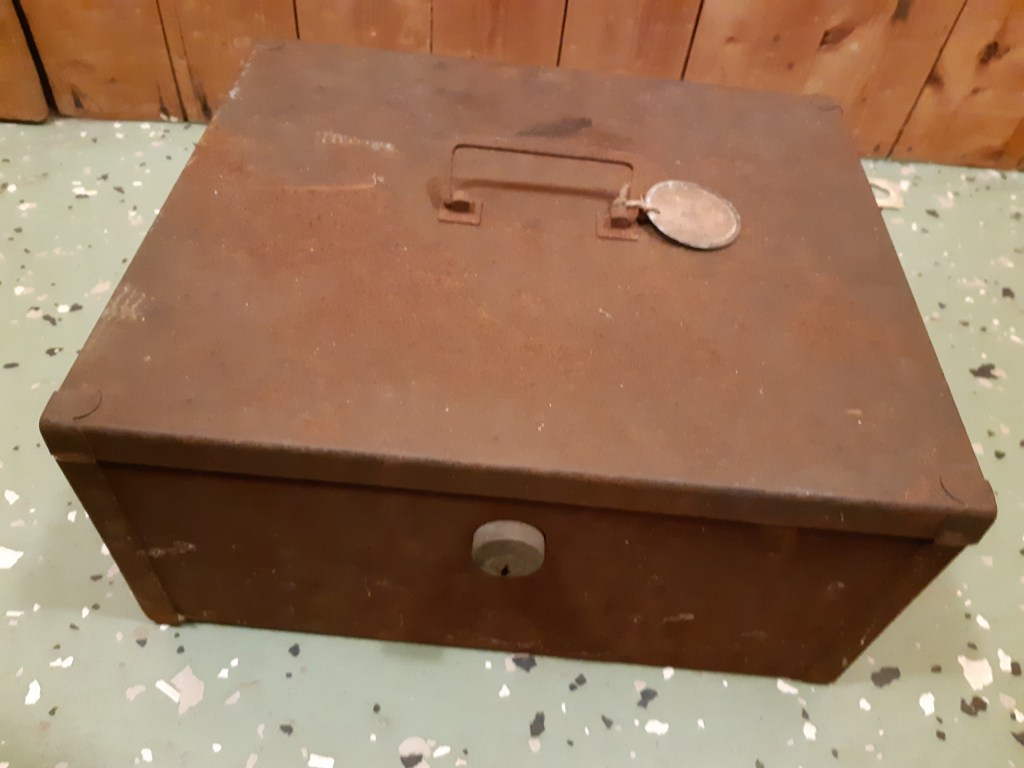
The collection also includes various objects, such as a ceremonial trumpet and two ceremonial swords, which were specially made for Abbate in the late 1910s and early 1920s. It also features some jewelry, including a ring, a bracelet, and several brooches, as well as about twenty printing plates. Moreover, there are books from Abbate’s library, liturgical vestments, and numerous patterns for such vestments, not to mention a collection of relics kept in an iron box, including Abbate’s hair and beard, as well as finger and toenail clippings!

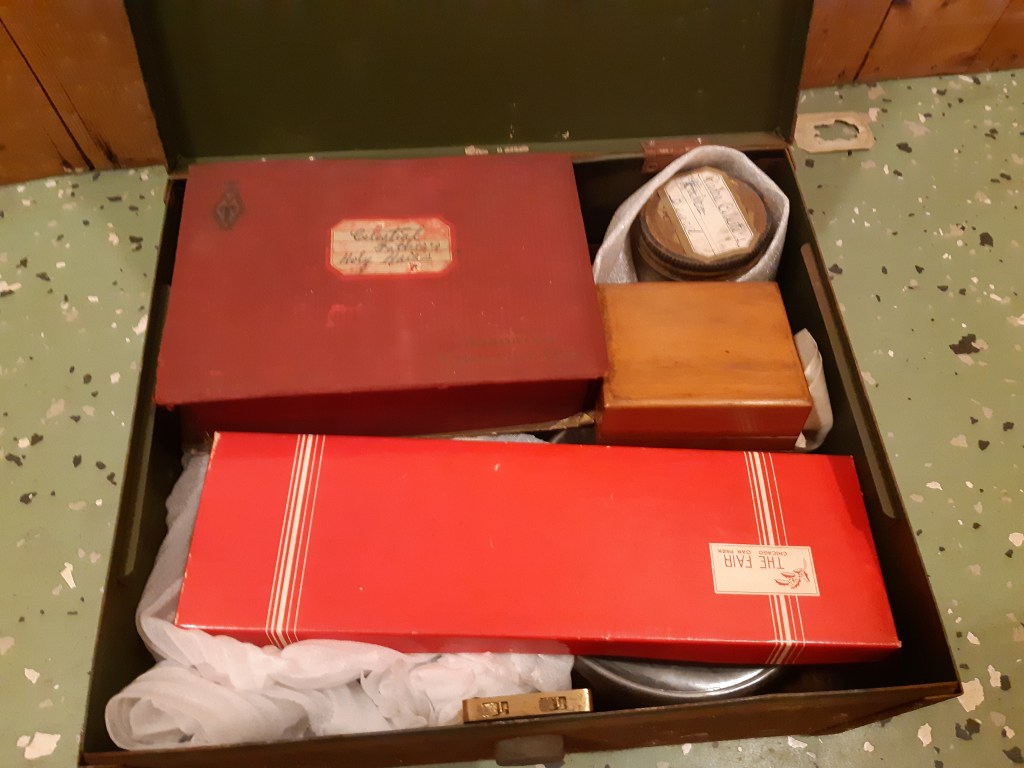
 Magnus Lundberg
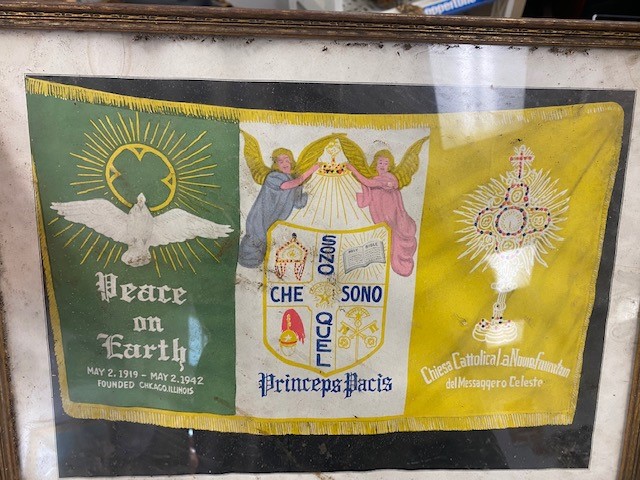
I thought this might be of interest. Years ago I found, in a New Orleans antique store, a printed, illustrated document of sorts that was decorated around the border with what looked like old place mats or some other type of decorative kitchen material. The image itself was mystery to me: a small portrait of a man in the center of a sort of cross with the words “Che Sono Quel Sono” and created above it in the largest type: “Alfa Elfa Sette.” I finally connected online with James Craig, who gave me the background to Abbate, his church and followers. And I have learned more today looking through your various sites, books, and posts. Fascinating stuff!
I’m sure you know the document/image I’m referring to. It’s on the wall behind him seated at his desk in photo #17 on p. 88 of your book, which I just came across online today.
The piece appears to be a bit smaller than the one in the photo, but the frame it was in looks very similar. And of course, it also includes the decorative trim added by someone (J. Craig suggested probably one of his followers or “nuns”). The piece is in good shape; the frame is a little worn and the glass has broken.
I’ve had it hanging in my house for years, until the glass broke, and now that I’m in the process of clearing out some collectibles, I’m considering putting it on my Etsy shop and/or eBay. I don’t know how many of these may still exist. Perhaps you found some in this document haul.
Anyway, just thought you might be interested in knowing about this. I can send you photos if you’d like.
Thanks for your very informative research about this man and his religious practices. Happy to be in touch about any of this.
Rob Nixon
LikeLike
Thank you! Interesting information. There was a New Orleans connection. Abbate had a colorful representative in New Orleans: Biaggio Montalbano. He owned The Angel of Peace sandwich shop, known for selling “a remarkable sandwich on round Italian bread, the loaf named the muffuletta. He called his version of that garlic-enhanced concoction of olive salad, meats, and cheeses, the Roma Sandwich.” In his shop, Montalbano also had a kind of chapel, the Roma Room, filled with Catholic paraphernalia. The room/chapel was dedicated to Roosevelt (and later Mussolini, too) and evidently blessed by Pius XI. Still, Montalbano seems to have believed that Christ lived in Chicago, and was called Abbate, and had an active sandwich mission, blessing every customer. I have a few letters from Montalbano to Abbate in the 1940s and 1950s, but also letters about “graces received” sent to Montalbano and forwarded to Abbate.
LikeLike
Another New Orleans related thing. About a year ago a watched Oliver Stone’s controversial movie “JFK” which is mainly set there. In the apartment owned by David Ferrie, one of the purported murderers was an image of Abbate. Ferrie and several of his associates were independent bishops and must have had some connection with Abbate or perhaps Montalbano. It was very strange to suddenly see a full-size image of the Celestial Messanger in this famous movie.
LikeLike
The story just keeps getting more interesting! Thank you for the background on the New Orleans collection. I looked up the name and found this article: https://www.myneworleans.com/biaggio-montalbano/. Doesn’t say much more than you already know, and doesn’t mention Abbate, but it’s another colorful tidbit.
Thanks for getting in touch about this little gem I found. I enjoyed your book, and I wish you the best in all your scholarly and other work.
LikeLike