Catholic Archives

Catholic Archives

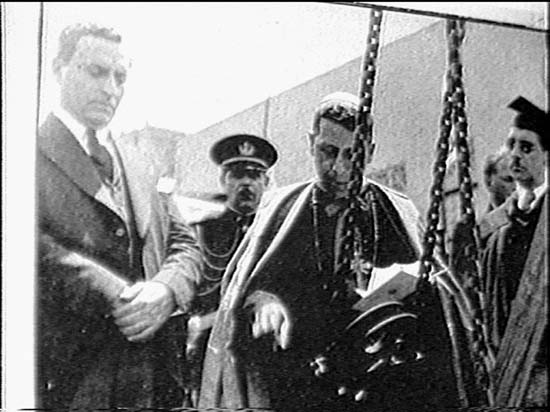
“Roman Catholic Archives in Latin America: Status Quaestionis”

Magnus Lundberg

Published in SMT: Swedish Missiological Themes/ Svensk Missionstidskrift 95:1 (2007) – Special issue on Archives, Societal Amnesia and Survival.

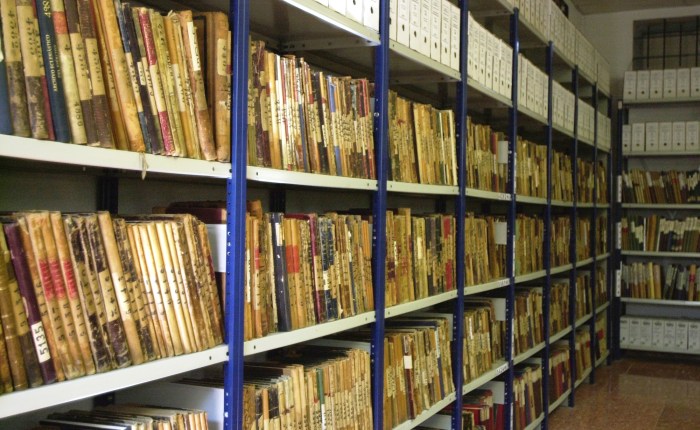
The aim of this article is to give a brief overview of the current status of Roman Catholic archives in Latin America. It is an immense subject which hardly can be satisfactorily treated in a brief article. Here, I will therefore specifically focus on the case of Mexico. However, it should be indicated that the Mexican case is not entirely representative, as the current status of the Catholic archives there is better than in most other places in Latin America. It is, however, a good example of what can be done.

The text is found here

Magnus Mörner

Magnus Mörner

“Conversación con Magnus Mörner”

Carlos Contreras & Magnus Lundberg 

Publicado en Histórica, vol. XXXII:2 (2008)

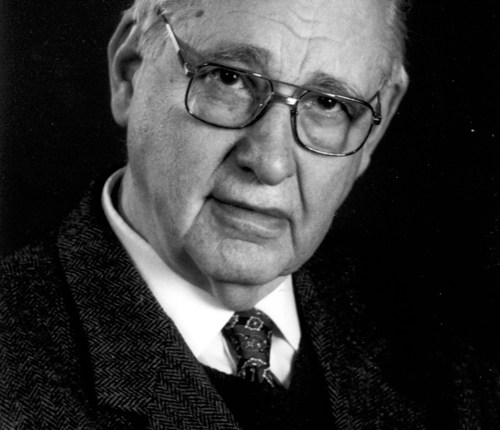
Una entrevista de 2009 con el destacado historiador sueco Magnus Mörner (1924-2012), conocido internacionalmente por sus muchos estudios latinoamericanistas.

El artículo completo se encuentra aquí.

See also my obituary in Hispanic American Historical Review 92:4 (2012) here

Requiescat in pace

Parish Life in Colonial Mexico

Parish Life in Colonial Mexico

Magnus Lundberg

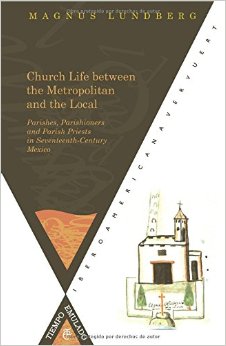
Church Life between the Metropolitan and the Local: Parishes, Parishioners, and Parish Priests in Seventeenth-Century Mexico,

Orlando, FL: Vervuert & Iberoamericana, 2011, 278 pp.

Church Life between the Metropolitan and the Local is a study of parishes, parishioners and parish priests in central Mexico during the first half of the seventeenth century. Using a number of different genres found in archives and libraries on both sides of the Atlantic, the book gives a multifaceted picture of the parish life. It addresses metropolitan norms for the ministry as well as priestly and indigenous interpretations of the day-to-day life in the local church.

Throughout the book particular emphasis is put on the interface between the indigenous parishioners and their parish priests, thus contributing to a closer study of the slow-moving processes of religious indoctrination and religious change in central Mexico a century or more after the Conquest.

Here you may order the book and read extracts and reviews.

Here you find more extracts from the book.

Mission Sudies in Sweden, 1910s-1930s

Mission Sudies in Sweden, 1910s-1930s

Gustaf Lindeberg and the Place of Academic Mission Sudies in Sweden, 1910s-1930s

Magnus Lundberg

Chapter published in: Carine Dujardin & Claude Prudhomme (eds.), Mission & Science: Missiology Revisited/Missiologie revisitée, 1850-1940, Leuven: Leuven University Press, 2015.

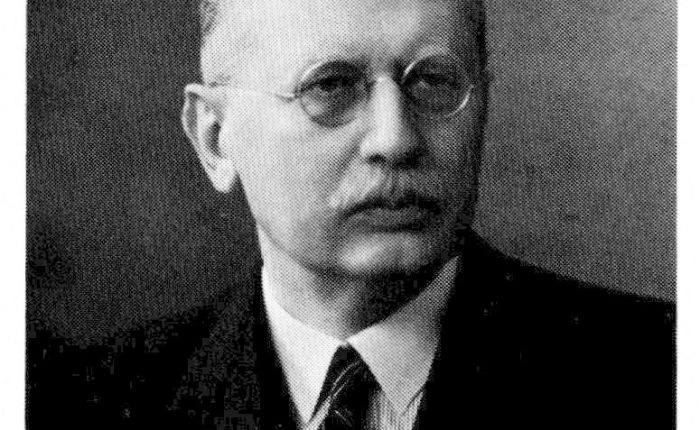
Academic interest in missions increased in many parts of the world following the 1910 Edinburgh Conference. Scandinavia and Sweden were no exceptions. At that time, there were only two major universities in Sweden: Lund and Uppsala. Both universities had their own theological faculty and to some extent they formed two separate worlds without much cross-fertilization. In this article, I focus on the place and role of academic mission studies at Lund University in the early decades of the twentieth century, which was more or less equivalent to the work of Gustaf Lindeberg (1878-1961). He will thus be at the centre of our attention.

In 1918, Lindeberg became the first Swede to defend a doctoral dissertation on a purely missiological subject. After completing his doctorate, he became a lecturer in mission history at Lund University. A prolific, if perhaps not very original author, Lindeberg published a dozen monographs and several hundred articles on mission-related subjects, all of them written in Swedish. Most of his publications were not intended for an academic audience, but a more general public. In this article, I shall therefore emphasize Lindeberg’s role as an active populariser of academic mission studies.

The full text is available here

Extracts of the whole book is found here

Church and State in Costa Rica

Church and State in Costa Rica

“Overcoming or Silencing Conflicts: The Catholic Church and the Building of the Costa Rican Welfare State”

Magnus Lundberg

Originally held as a lecture at the University of Groningen in 2006; lightly revised in 2016

In this article, I briefly analyse the role of religion in the construction of the Costa Rican society from the 1930s onwards. I focus on the relations between the Roman Catholic Church and the Costa Rican government. It is always difficult to speak about the position of the church. To avoid hasty generalisations, I will therefore limit myself to the public statements made by the Costa Rican archbishops. Even more concretely, I am interested in the archbishops’ concern with what usually is called la cuestión social – the social issue. That is, their treatment of themes such as poverty and inequality.

The text is available here

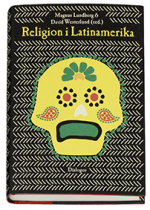
Religion i Latinamerika

Religion i Latinamerika

Religion i Latinamerika

Beställ ett exemplar här

Essäer

Essäer

Under ett antal år publicerade jag ganska regelbundet essäer i svenska dagstidningar, i synnerhet “understreckare” i Svenska Dagbladet. Här är några länkar till sådana artiklar.

En kvinnlig missionär tog sig an England”, Svenska Dagbladet, 15 juli 2010.

Luther en orm i Mexikos paradis”, Svenska Dagbladet, 26 augusti 2009.

Ett skepp kommer lastat med laster”, Svenska Dagbladet, 10 maj 2009.

Den hårda striden om Guds stad”, Svenska Dagbladet, 11 juni 2007.

Mayafolkets röster ekar i ny forskning”, Svenska Dagbladet, 16 augusti 2006.

Den heliga jungfrun en krigisk general”, Svenska Dagbladet, 3 november 2005.

Kan den rätte påven resa sig?”, Dagens Nyheter, 26 juli 2005

Här är två essäer som publicerades i tidskriften Signum

“Catarina de San Juáns andliga flygfärder”, Signum 2005:9

“Den palmarianska kyrkan”, Signum 2010:5

Some Good Reads During 2015

Some Good Reads During 2015

Here are some titles I have enjoyed during 2015 and which have little to do with my main research.


Caryl Phillips, Crossing the River

V.S. Naipul, The Middle Passage: Impressions of Five Colonial Societies

Judith Schalansky, Atlas över avlägsna öar: Femtio öar som jag aldrig besökt och aldrig kommer att besöka

Judith Schalansky, Giraffens hals: En bildningsroman

Anna Gavalda, Tillsammans är man mindre ensam

Emile Ajar, Med livet framför sej

Haruki Murakami, 1Q84, del 1-3

Lorena Macianskaite (red.), Litauen berättar: Att avregistrera ett spöke

Marie-Elena John, Unburnable

Hubert Wolf, The Nuns of Sant’ Ambrogio

Gerard Russell, Heirs of the Forgotten Kingdom

Continue reading “Some Good Reads During 2015”

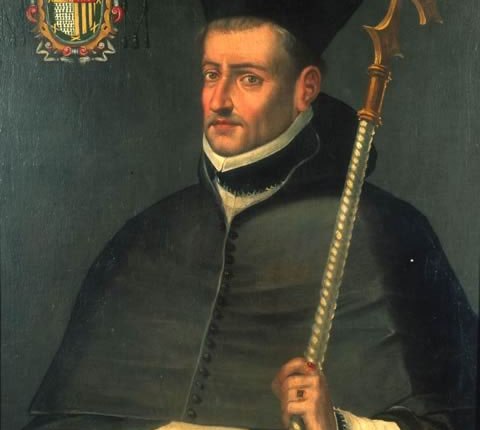
Archbishop Montúfar and Guadalupe

Archbishop Montúfar and Guadalupe

“The Archbishop and the Virgin: Alonso de Montúfar and the Early Cult of Our Lady of Guadalupe”

Magnus Lundberg 

Article published online in 2015 (but based on a chapter of my doctoral dissertation, defended in 2002).

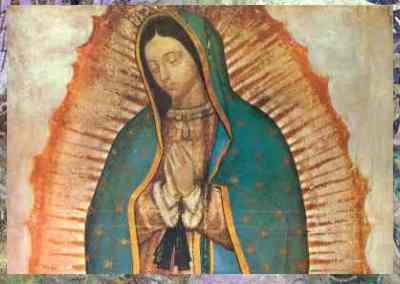
In this article, I critically assess a number of documents related to the cult of Our Lady of Guadalupe at Tepeyac in the mid-sixteenth century. It seeks to counteract the many bad scholarly contributions on Guadalupe, published in both theologically “conservative” and “radical”/”contextual” circles.

It is, of course, interesting to study how Guadalupe has been interpreted throughout the ages and what role she plays today. Still, to establish facts about the origin of a cult of the Virgin of Guadalupe requires a very close assessment of the existing sources. There are so many farfetched interpretations of documents (and “silences”) that have been made into truths and there are even fabricated sources that support certain ideological views. Thus, a source critical study of a very traditional kind can do much good.

In the documents that without a doubt can be dated to Alonso de Montúfar’s time as archbishop of Mexico (1554-1572), I have not found any foundation for the story about Juan Diego and Bishop Zumárraga that, at least since the 1640s, has been associated with the cult. Still, there are indications that at least an outline of story of about the miraculous origin of the image and the direct imprint of the Virgin on an indigenous man’s cloak, was known by the 1610s or 1620s (but that will be the subject of another article)

Continue reading “Archbishop Montúfar and Guadalupe”

Concilios provinciales mexicanos

Concilios provinciales mexicanos

“Las actas de los tres primeros concilios mexicanos Historia diplomática y estudio de su itinerario”

Magnus Lundberg

Publicado en Anuario de Historia de la Iglesia, 15 (2006)

En 1546 la Santa Sede erigió las arquidiócesis de México, Lima y Santo Domingo. En consecuencia, las diócesis de las Indias dejaron de ser sufragáneas del arzobispo hispalense y formaron tres nuevas provincias eclesiásticas al otro lado del mar. Este evento marcó el inicio de la época dorada de los concilios provinciales en Hispanoamérica.

En la provincia mexicana se celebraron tres concilios en 1555, 1565 y 1585, que salvo un cuarto sínodo provincial reunido en 1771, fueron los únicos concilios celebrados en la Nueva España durante la colonia. Además, dada la relativa ausencia de sínodos diocesanos mexicanos, los decretos de los primeros concilios deben ser considerados como fuentes indispensables para el estudio de la historia eclesiástica novohispana.

Por mucho tiempo los decretos originales de los tres conciliares se guardaron en el archivo de la catedral mexicana. Sin embargo, ahora se encuentran en Bancroft Library en Berkeley, Estados Unidos de Norteamérica. Entre los llamados Mexican manuscripts de la dicha biblioteca, existen cuatro volúmenes, que incluyen tanto los decretos de los tres concilios novohispanos como muchos papeles de trabajo del tercer concilio.

En este artículo no intentaremos analizar el contenido legislativo de los concilios mexicanos. Nuestro enfoque se va a circunscribir a las actas conciliares como tales, o sea, vistos como diplomas. Por eso, analizaremos las actas de los concilios mexicanos, tanto sus versiones manuscritas como las tempranas ediciones impresas. Nuestro propósito principal es, en definitiva, estudiar las peregrinaciones de las actas originales para averiguar cómo pasaron del archivo de la catedral de México a la Bancroft Library.

El artículo completo se encuentra aquí