White Smoke over Montana: Pius XIII and the true Catholic Church

White Smoke over Montana: Pius XIII and the true Catholic Church

Annuntio vobis Gaudium magnum. Habemus Papam. Reverdissimum Patrem Lucianum Pulvermacher, OFM Cap., Sanctae Catholicae Ecclesiae Presbyterem.

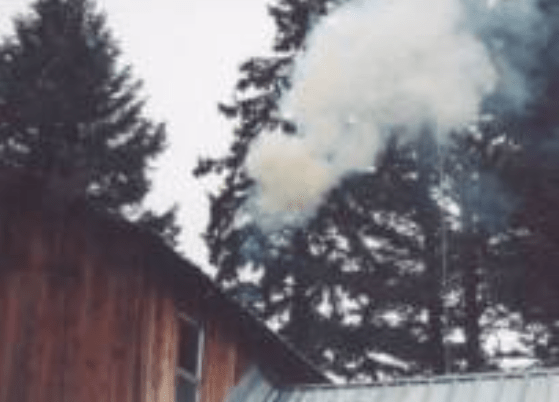
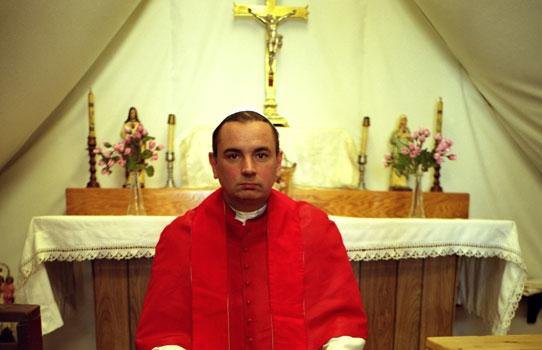
On October 24, 1998, white smoke appeared from the chimney of a small house in Montana. It was the signal that a new pope was elected. According to those present, the event ended a forty-year interregnum when the Catholic Church lacked a true leader. To them, there had been imposters on the Holy See ever since the death of Pope Pius XII in 1958.

The pope elected in Montana was the Capuchin priest Lucian Pulvermacher (1918–2009), who had left the ‘Novus Ordo church’ in 1976, becoming a sedevacantist. He took Pius XIII as his papal name, leading the true Catholic Church. Officially, ‘true’ should always be written in lowercase, as the Church Pius XIII led was nothing but the one Catholic Church, now in exile. Over fifty persons participated in the conclave. Apart from Pulvermacher, they were all laypeople, and most electors were not present but called or sent in their ballots.

For the research report

For a collection of papal documents, see

The Invisible Pope: Linus II and the 1994 Assisi Conclave

The Invisible Pope: Linus II and the 1994 Assisi Conclave

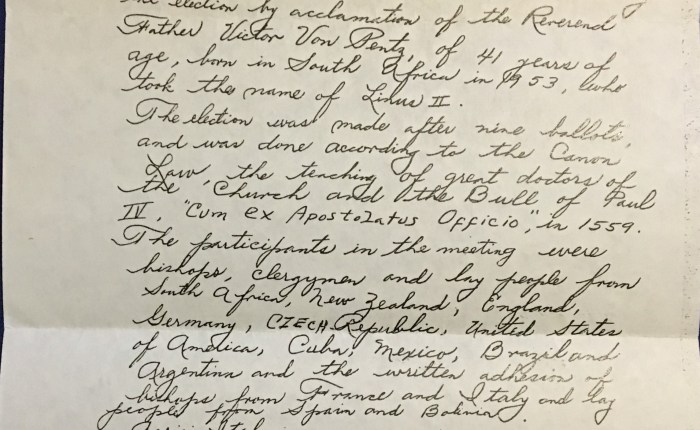
On June 29, 1994, a dozen people met in Assisi, Italy, to pursue a papal election, as they were convinced that John Paul II and his three predecessors were heretics and anti-popes and that the Holy See was vacant since Pius XII died in 1958. They held the theological position known as sedevacantism. As they claimed that no orthodox cardinals remained in the era of general apostasy, an ordinary conclave was out of the question. Still, the Holy See could not remain perpetually vacant, as St. Peter would always have successors until the end of time. Thus, they argued that it was lawful and, indeed, a duty for the faithful remnant–clergy, and laypeople–to restore the papacy and re-establish papal jurisdiction. This position is called conclavism. The participants in the Assisi conclave elected 41-year-old South African priest Victor Von Pentz (1953–2021), who took Linus II as his papal name.

See my research report:

Habemus Papam!: Michael II

Habemus Papam!: Michael II

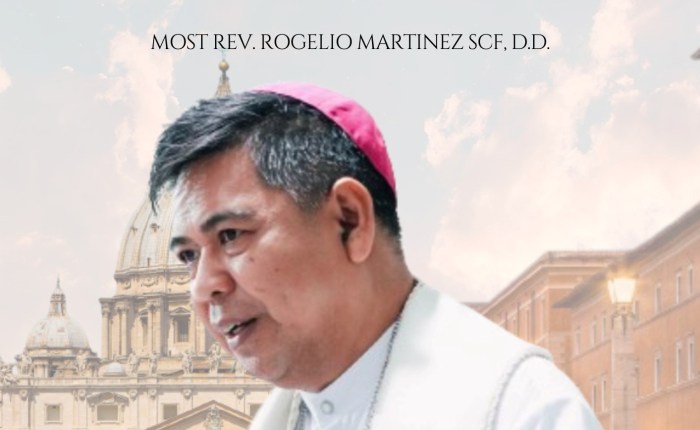
On 29 July 2023, Archbishop Rogelio del Rosario Martinez Jr (b. 1970) was elected the successor of Pope Michael (David Bawden) and took Michael II as his papal name.

In February 2023, I wrote a substantial piece on Pope Michael for the World Religions and Spirituality Project. Pope Michael (David Bawden, 1959-2022) was elected in a small conclave in Kansas in 1990 and, for the last decade, based in Topeka. He claimed the papacy from his Vatican in Exile until his death on 2 August 2022.

From the time of his passing away, his group of adherents declared the Holy See vacant and began planning for a new conclave. Until recently, no date was fixed, but the group officially announced it in the June 2023 issue of the Olive Tree newsletter.

Continue reading “Habemus Papam!: Michael II”

New article on Book Sales and Literary Migration

New article on Book Sales and Literary Migration

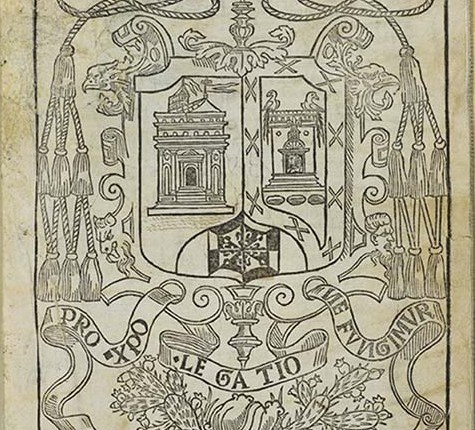
My article “The Decrees of the First Mexican Council (1555): Confiscations, Collectors, and Literary Migration” was published in The Papers of the Bibliographical Society of America, vol. 117, no. 2 (June 2023), pp. 143-171.

Abstract: This piece studies the decrees of the First Mexican Council, gathered in 1555 to establish legal norms for the newly founded Church province. Apart from some notes on the conciliar context, the article focuses entirely on the original manuscript (1555) and the first print edition (1556). It explains how the manuscript moved from the cathedral archives in Mexico City into the collections of Bancroft Library, where it is found today. The article also traces the provenance of all known copies of the first print edition. Many of them passed through the bookshelves of Mexican collectors, and today the majority are held by libraries outside Mexico. To understand this particular case, I identify members of the nineteenth- and early twentieth-century networks involved in book and manuscript trade. I also explain how dramatic events in Mexican history allowed them to acquire early colonial documents and imprints. Combining provenance research with an analysis of the broader historical and political context, I provide a case study of the close relationship between historical developments, book collecting, and book sales, which led to the veritable exodus of written material from Latin America to Europe and North America.

The article is available here

Pope Tsietsi Makiti and the Gabola Church

Pope Tsietsi Makiti and the Gabola Church

The Alternative Pope Project I initiated in 2015 analyzes twentieth and twenty-first-century papal claimants. My focus is on persons who have claimed that they, not the vastly more recognized Roman pontiff, are the Catholic Church’s leader. For example, I don’t include the leaders of the Coptic Church, often called popes, as they do not claim to be successors of St. Peter. Neither do I include the Caodaist popes. Caodaism is a Vietnamese religion led by a pontiff and a college of cardinals. Though Catholic practices influence Caodaism, it is closer to Buddhist, Daoist, and Western Spiritist teachings.

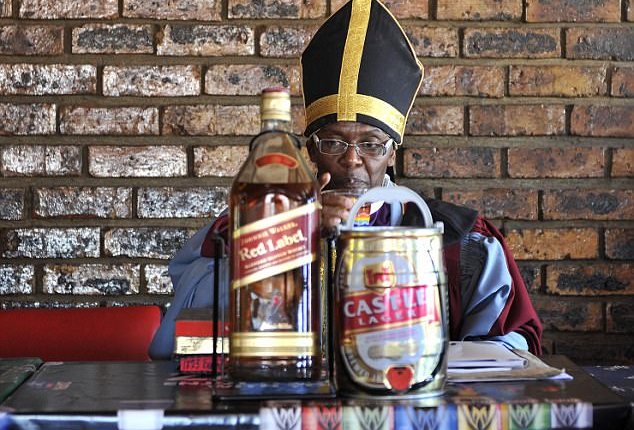
Reformer Jean Calvin and Evangelist Billy Graham have sometimes more or less ironically been called the Protestant Pope, but of course, they did refer to themselves as such. However, leaders of a few groups of Protestant origin in the broadest sense of the word have declared themselves popes. One example is Guyanese Philbert London, televangelist and the leader of the Beacon Ministries and the House of Majesty, an independent Christian community influenced by prosperity theology. He claimed that God elected him pope and was publicly installed in 2016, taking Emanuel as his papal name. Another example is South African Tsietsi Makiti, leader of the Gabola Church.

Continue reading “Pope Tsietsi Makiti and the Gabola Church”

Upcoming Conclave: A Successor of Pope Michael Will be Elected

Upcoming Conclave: A Successor of Pope Michael Will be Elected

In February 2023, I wrote a substantial piece on Pope Michael for the World Religions and Spirituality Project. Pope Michael (David Bawden, 1959-2022) was an alternative pope, elected in a small conclave in Kansas in 1990 and for the last decade based in Topeka. He claimed the papacy until his death on 2 August 2022. From the time of his passing away, his group of adherents declared the Holy See vacant and began planning for a new conclave. Until recently, no date was fixed, but in the June 2023 issue of the Vatican in Exile’s newsletter: The Olive Tree the group makes an official announcement on the conclave. It will be held in late July. Surprisingly, the electors will not gather in the United States but in Vienna.

“On Conclave
It’s almost a year ago when His Holiness Pope Michael of happy memory met his Creator. We are dilapidated by his passing away but we are grateful to the Lord for giving him to us. Pope Michael has left us a legacy that is priceless. That is from mere sedevacantism to conclavism. He did not mind the persecution, what matters is the good of the Church. His reputation was maligned yet what matters to him is ” sentire cum ecclesiae ” i.e.thinking with the mind of the Church.

Continue reading “Upcoming Conclave: A Successor of Pope Michael Will be Elected”

Maurice Archieri: The French Vicar of Christ

Maurice Archieri: The French Vicar of Christ

On Pentecost, 5 June 1995, Maurice Archieri (1923–2016), a retired car mechanic living in the Parisian suburb of Le Perreux-sur-Marne, received an intellectual vision where the Holy Ghost made him the Vicar of Christ.  Archieri took the name Pierre II–Peter II–but clarified that he was not the pope.  According to his understanding, John Paul II materially occupied the Holy See.  However, he was not a valid–formal–pope but the leader of a new non-Catholic religion.  Based on private revelations and apocalyptical writings, Archieri claimed that there could be no pope in the current era and that he, as the Vicar of Christ, was the leader of the Catholic remnant in the age of general apostasy.

See the Alternative Pope Project Working Paper “Maurice Archieri (1923-2016): The Vicar of Christ in Le Perreux-sur-Marne”, which also includes a collection of texts written by Pierre II.

Reservoarpennor: Design, teknik och historia. Reviderad utgåva.

Reservoarpennor: Design, teknik och historia. Reviderad utgåva.

Ett av mina största icke-akademiska intressen är reservoarpennor. Jag samlar framförallt äldre pennor och har ägnat en del av denna hemsida åt ämnet: www.magnuslundberg.net/reservoarpennor. Sidan utvecklas hela tiden, men nu har jag sammanställt innehållet som det ser ut i mars 2023 i en e-bok Reservoarpennor: Design, teknik och historia (415 sid.) som är tillgänglig här.

New Article on Pope Michael

New Article on Pope Michael

I have recently published a substantial entry (some 30 pages) on Pope Michael which forms part of the important World Religions and Spirituality Project (WRSP), an online resource focused on new and emergent religious groups, edited by Professor David G. Bromley at Virginia Commonwealth University.

David Bawden (1959–2022) was elected Pope Michael I in a 1990 conclave in Kansas.  He was neither the first nor the last man to become an alternative pope during the twentieth century. There have been dozens of others who claimed that they, not the vastly more recognized pope in Rome, are the true leader of the Catholic Church. Generally, they argue that we live in an era of general apostasy and that the modern church, particularly after the Second Vatican Council (1962–1965), has nothing to do with true Catholicism. Several of the latest Roman pontiffs were antipopes and leaders of a new non-Catholic religion. Most alternative popes assert that they were elected through direct heavenly intervention, and David Bawden was the first elected in an alternative conclave. He claimed the pontificate for thirty-two years, leading a small group of followers.

My text is found here

A Newly Discovered Collection of Documents from the New Jerusalem Catholic Church of the Celestial Messenger

A Newly Discovered Collection of Documents from the New Jerusalem Catholic Church of the Celestial Messenger

Almost four years ago, I co-authored the book Giuseppe Maria Abbate: The Italian-American Celestial Messenger with James W. Craig. At that time, we believed that essentially all archival material related to Abbate and his New Jerusalem Catholic Church of the Celestial Messenger had been destroyed in the early 1990s.

However, a sizable collection, once part of the church archive, has recently appeared. It includes publications, documents, photos, and objects. Not even the official publications, such as the L’Araldo magazine, are found in any research library I know. Thus, the collection contains unique materials and will serve as a basis for further studies on Abbate and his church. Currently, the archive is stored with me, and I’m preparing an article about the foundation and early development of the church. Hopefully, other studies will follow. In the near future, I will publish a selection of reproductions of photos and pictures of objects from the collection on this website. Below, you will find a few images of the collection before I started organizing it.

Continue reading “A Newly Discovered Collection of Documents from the New Jerusalem Catholic Church of the Celestial Messenger”