New Study on Pope Christophe XVIII and La Très Sainte Église de Jésus-Christ, Mission de Banamè in Benin

New Study on Pope Christophe XVIII and La Très Sainte Église de Jésus-Christ, Mission de Banamè in Benin

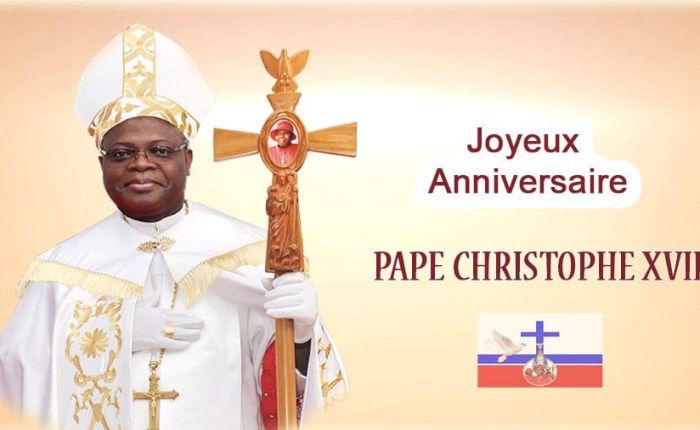
In 2009 Mathias Vigan was a Roman Catholic parish priest in the village of Banamè in south-eastern Benin. In January that year, he met a young woman named Vicentia Tadagbé Tchranvoukinni, whom he exorcised. As she went through the deliverance process, she assumed a new name, Parfaite, claiming increasing charismatic powers and wisdom. Soon, she asserted that she God the Holy Spirit–Dieu Saint-Esprit–also referring to herself as Daagbo.

Daagbo’s End Time mission to extirpate “witchcraft” and crush the Devil’s power; to purify and renew the Catholic Church; and to create peace and prosperity, saving humanity from eternal damnation. By her side was another young woman, Nicole Soglo, whom Daagbo asserted to be the representative of the Virgin Mary on earth: Nanyé Nicole. Mathias Vigan believed in Daagbo’s claims and took an active part in the mission.

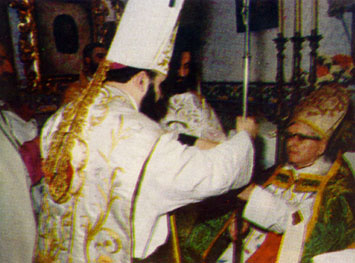
In 2011, Daagbo founded a separate church, currently know as La Très Sainte Église de Jésus-Christ, Mission de Banamè–The Most Holy Church of Jesus Christ, Banamè Mission. But in her view, it was nothing new, but the One True Catholic Church, founded by her son Jesus Christ. Eventually, in late 2012 she made Mathias Vigan pope with the name Christophe XVII, and with time the pope, too, received an increasingly divine status as another Jesus.

My research report on La Très Sainte Église de Jésus-Christ, Mission de Banamè is found here.
The Slavic Pope? Jan Maria Michał Kowalski and the Mariavites

The Slavic Pope?  Jan Maria Michał Kowalski and the Mariavites

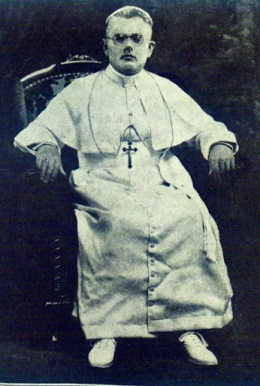
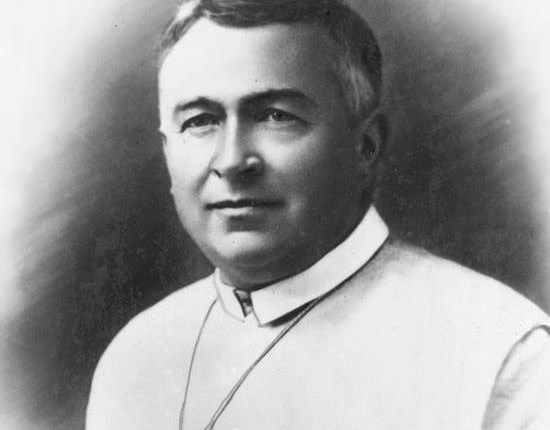
As far as we know, Archbishop Ján Maria Michał Kowalski (1871–1942), the longtime leader of the Polish (Old) Catholic Mariavite Church claimed much spiritual power, even a kind of Messiah-status, but that he never explicitly claim the papacy. Still, bishops in the Mariavite core group, at least from the mid-1920s, asserted that the Roman pontiff was not the true pope anymore, that the Holy See had moved from Rome to the Mariavite centre in Plock, and that Kowalski was the long-awaited ‘Slavic Pope’, that Polish nationalist authors wrote about: a liberator and a benevolent religious leader.

The founder of the Mariavites was Sister Feliksa Maria Franciszka Kozlowska (1862–1921), often called Little Mother (Mateczka). She claimed to receive divine revelations–‘understandings’–from 1893 onwards, and the interpretation of them played a significant role in the development of the Mariavite doctrine, both before and after her death. Posthumously many followers believed Little Mother to be divine, and Archbishop Kowalski had an almost sacred status, even during his life. Claiming ‘understandings’, too, he introduced drastic doctrinal changes throughout the 1920s. Still, Kowalski’s autocratic rule and the unorthodox doctrinal development led to a schism in 1935, when only a small minority of the faithful remained with him.

A preliminary version of my text on Kowalski and the Mariavite papacy is found here

The Faithful Remnant and the Canadian Last Pope

The Faithful Remnant and the Canadian Last Pope

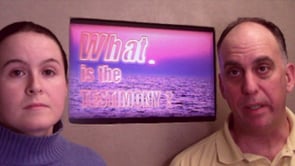
There is a small religious group, which by November 2017 had about twenty members, which is called the Faithful Remnant and believe that they constitute the true Roman Catholic Church. The leader of the group is the Canadian Douglas (Doug) Kuzell who claims that he is the Last Pope, Petrus Romanus. Moreover, Kuzell and his wife, Teresa Jackson (Mary Romanus) claim that they are the Two Witnesses, referred to in the Book of Revelation 11:1-14. My research report on the Two Witnesses was originally written in February 2017, but due to the quite dramatic development, it was updated in February 2018.


The research report is found here: The Faithful Remnant and the Last Canadian Pope

Modern Alternative Popes 24: Argentinean Pedro Segundo

Modern Alternative Popes 24: Argentinean Pedro Segundo

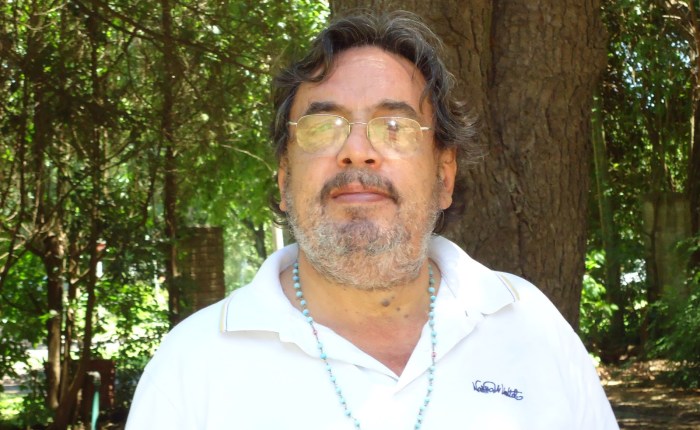
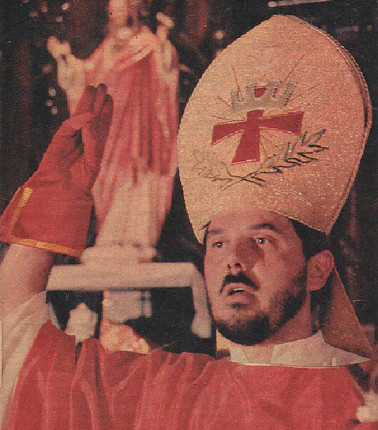
Segundo Ubaldo Rolón (Pedro Segundo, 2007-2016). In some respects, this Argentinean papal claimant is a rather typical representative for the mystically elected alternative popes. Marian apparitions played an important role for his claim as well as the assertion that humanity lives in the End Time. He had a clear focus on the events described in the Book of Revelation and their application to the present era. Still, the symbiosis between religion and politics–in this case, a form of “Transcendent Peronism”–makes it quite unique.

Continue reading “Modern Alternative Popes 24: Argentinean Pedro Segundo”

Modern Alternative Popes 23: Colombian Pedro II

Modern Alternative Popes 23: Colombian Pedro II

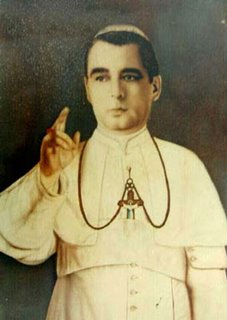
Antonio José Hurtado (Pedro II, 1939-1955) was a Colombian, self-trained dentist. After the death of Pope Pius XI in 1939, he proclaimed himself Pope Peter II, stating that he was elected by God. Hurtado’s claim to the papacy only ended with his death in 1955. Thus, his papal claim had nothing to do with the reforms in the Roman Catholic Church in the 1960s. The following text is not built on a detailed study of primary sources but mostly relies on secondary material, including some fine articles about this intriguing man (see list of references).

The future pope was born in 1892 in the small town of Barbosa, some 40 kilometres north of Medellín. As a young man, he studied at the Thomas Aquinas Seminary in Santa Rosa de Osos but left when his father died. Hurtado seems to have had great entrepreneurial skills and he was a quick learner. He moved to Bogotá, where he worked in many different areas without having formal training in any of them. Among other things, he became a carpenter, a tailor, a goldsmith and an ambulating photographer.

Continue reading “Modern Alternative Popes 23: Colombian Pedro II”

Modern Alternative Popes 21: Athanasius I

Modern Alternative Popes 21: Athanasius I

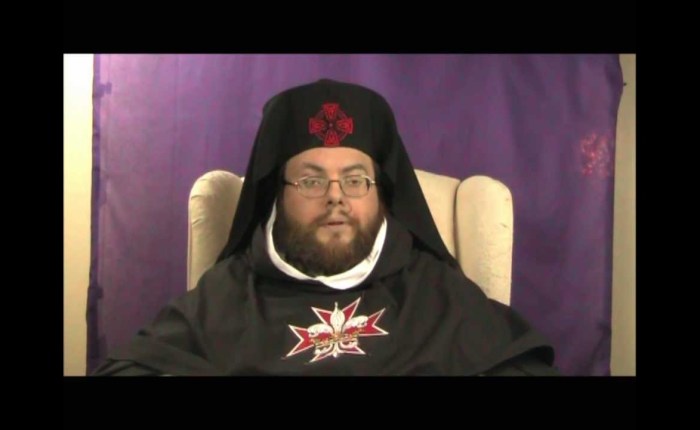
Bryan Richard Clayton (Athanasius I, 2011-?) was born in 1975 in Chicago. He worked as a policeman and a security guard and then briefly attended the sedevacantist CMRI seminary in Omaha, Nebraska. According to some sources, he thereafter received training from a traditionalist Franciscan in Mexico. Clayton was ordained a priest around 2005, and in 2007, he was consecrated by Bishop Patrick Taylor of the Society of the Virgin Mary, who resided in Buckley, West Virginia.

Continue reading “Modern Alternative Popes 21: Athanasius I”