Modern Alternative Popes 14: William Kamm

Modern Alternative Popes 14: William Kamm

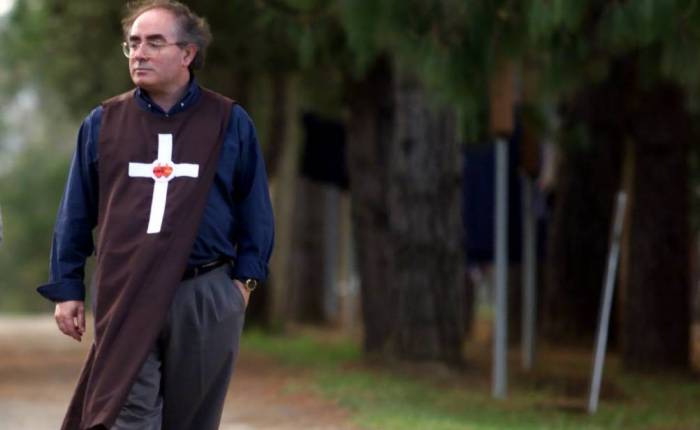
William Kamm (the future Peter II) was born in 1950 in Cologne, Germany, but as a little child, he moved to Australia together with the rest of the family. Aged eighteen, he said that he had begun receiving heavenly messages and gathered a small group of followers, who believed that he was a voice-box of God. In 1970 he founded the Marian Work of Atonement, his first religious organisation. During these years, he was a bank employee for some time.

Continue reading “Modern Alternative Popes 14: William Kamm”
Modern Alternative Popes 10: The Missionary Order for the Salvation of Souls

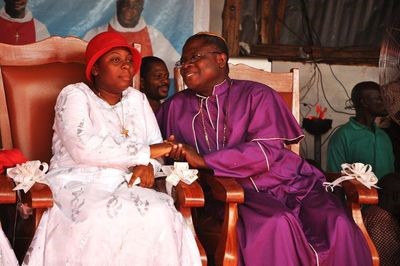
Valeriano Vestini (Valerian I, 1990-1995) was born Olinto Vestini, taking the name Valeriano when he joined the Capuchin order. He later became superior of the Mater Domini monastery in Chieti. In 1983, a local woman called Rita claimed to have dreams which featured Vestini as a representative of Padre Pio. The dreams included a divine command: that the group around her should work for the salvation of souls, joining forces with the seers of Lourdes, Fatima and Medjugorje. Rita left the group in 1989, and the role as the voice-box of heaven was taken over by Nicola Di Carlo and Alessandro Di Donato.


Continue reading “Modern Alternative Popes 10: The Missionary Order for the Salvation of Souls”

Modern Alternative Popes 9: Two Uncertain Cases

Aimé Baudet (Peter II or Peter Athanasius II, 1984?) is a Belgian man, who lived in Brussels. According to some reports, this man enthroned pope before St. Peter’s grave in 1984. Allegedly, he was a Palmarian ex-bishop. Still, this seems to be something of an urban legend.

Continue reading “Modern Alternative Popes 9: Two Uncertain Cases”

Modern Alternative Popes 6: The New Universal Church of the Sacred Heart of Jesus

Modern Alternative Popes 6: The New Universal Church of the Sacred Heart of Jesus

Gino Frediani (Immanuel I, 1974-1984) was born in 1913 and served as a parish priest in Gavinana in Italian Pistoia from the 1940s onwards. Beginning in 1973, he claimed to receive apparitions from Old Testament prophets. On 5 September 1973, he asserted that the prophet Habakkuk had placed a hand on his head saying that the Italian parish priest was chosen to fulfil a great universal mission: “to build a Holy Church to the Sacred Heart of Jesus”.

Continue reading “Modern Alternative Popes 6: The New Universal Church of the Sacred Heart of Jesus”

Modern Alternative Popes 5: The Palmarian Church

Modern Alternative Popes 5: The Palmarian Church

The Palmarian church evolved from a series of purported apparitions at Palmar de Troya in Spanish Andalusia from 1968 onwards. One of the seers, Clemente Domínguez Gómez and his brother in arms, Manuel Alonso Corral soon began to dominate the cult. The movement led by them became institutionalized. A religious order was founded, priests were ordained a bishops consecrated. At the death of Paul VI, in 1978, Clemente Domínguez testified that Christ had crowned him pope under the name Gregory XVII. The Holy See was moved to Palmar de Troya and the Holy Catholic Apostolic Palmarian Church was founded. The first pope was thus mystically elected, but he elected his successor Manuel Alonso (Peter II), who in his turn appointed Ginés Jesús Hernández Martínez (Gregory XVIII) his successor. When Gregory XVIII left the church in 2016 he was succeeded by the Swiss Markus Joseph Odermatt (Peter III)

For a detailed study on the Palmarian church, see my 2017 book A Pope of their Own: El Palmar de Troya and the Palmarian Church [2nd edition, 2020]
 

Modern Alternative Popes 2: Apostles of Infinite Love, France

Modern Alternative Popes 2: Apostles of Infinite Love, France

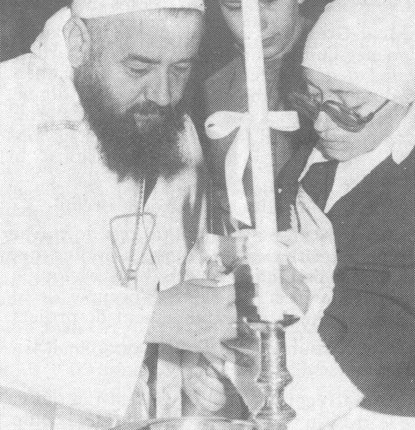
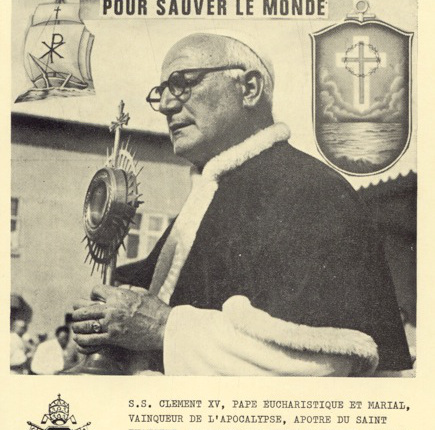
The relations between the popes related to the Apostles of Infinite Love is a complicated matter. The first pope, Clement XV, asserted that he from 1950 onwards assisted Pius XII and that he continued to support John XXII under his pontificate. To him, both Pius and John were true popes, though enemies in the Curia hindered them from acting freely. In short, they needed help from Pope Clement.

First with the election of Paul VI, in 1963, Clement claimed that he was the only true pope, moving the Holy See to Clémery, the small French town where he lived. In the late 1960s and early 1970s, the Apostles were divided into several groups, and a Canadian cardinal declared that he had been divinely chosen to replace the founder and took the name (John) Gregory XVII. Several other splinter groups appeared, and after Clement’s death in 1974, at least two other men have claimed to be his papal successor. Continue reading “Modern Alternative Popes 2: Apostles of Infinite Love, France”