Yet another volume in the Uppsala Studies in Church History series

Yet another volume in the Uppsala Studies in Church History series

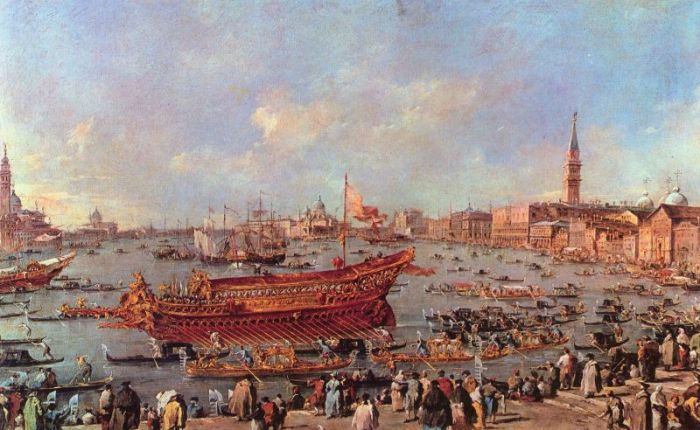
We have recently published volume 18 in the e-book series Uppsala Studies in Church History: Andreas Mazetti Petersson (ed.), Antonio Possevino’s Writings, Vol. II: Interdict Texts (1606-1607). The book consists of five texts in Italian written by or addressed to Jesuit Antonio Possevino (1533–1611) regarding the so-called Interdict Controversy of 1606 and 1607, which followed Pope Paul V placing an interdict on the Republic of Venice. The consequences were immediately felt since no sacraments could be administered within the confines of Venice’s vast territory. In response to the Interdict, the Venetian authorities expelled the members of the Society of Jesus, along with Theatines and Capuchins.

One aspect of the Controversy was the Guerra delle scritture (the War of Writings), in which several authors defended either the Holy See’s position or that of the Republic of Venice. Possevino was one of the most prolific writers who defended papal authority.

The five texts published in the volume are:

  1. Lettera del Padre Antonio Possevino Giesuita al Padre Marc’Antonio Capello, minor Conventuale, con la risposta di detto padre.
  2. Risposta d’un Dottore in Theologia ad una lettera scrittagli da un Reverendo suo Amico, Sopra il Breve di Censure dalla Santità di Papa Paolo V. publicate contro li Signori Venetiani. Et sopra la nullità di dette Censure, cavata dalla sacra Scrittura, dalli Santi Padri, & da altri Catolici Dottori.
  3. Le Mentite Filoteane overo Invettiva di Giovanni Filoteo d’Asti. Contra la Republica Serenissima di Venetia, Confutata da Fulgentio Tomaselli, filosofo Albanese chiamato aliàs il Capelletto, à favore della istessa Serenissma Republica.
  4. Risposta di Teodoro Eugenio di Famagosta all’avviso mandato fuori dal Signore Antonio Quirino Senatore Veneto, circa le ragioni, che hanno mosso la Santità di Paolo V. Pontefice à publicare l’Interdetto sopra tutto il Dominio Vinitiano.
  5. Risposta del Sig. Paolo Anafesto all’avviso del Sig. Antonio Quirino, Nobili Venetiani, circa la scommunica della santità di Papa Paolo V contro il Duce, & Senato di Venetia

Here, you may download the book.


About the Series

Continue reading “Yet another volume in the Uppsala Studies in Church History series”

New Volume in Uppsala Studies in Church History

New Volume in Uppsala Studies in Church History

We have recently published volume 17 in the e-book series Uppsala Studies in Church History: Andreas Mazetti Petersson (ed.), Antonio Possevino’s Writings, Vol. I: Apparato All’Historia (1598). This book will be followed by another volume of Jesuit Antonio Possevino’s (1533-1611) writings on the Venetian Interdict 1606-1607, which will be published as volume 18 in the same series.

The work’s full title is Apparato All’Historia di Tutte le Nationi et il Modo di Studiare la Geografia (Venice 1598). The main text comprises 270 leaves in octavo, preceded by 24 leaves with introductory matters ([24], 270, [2] fols.; a-c⁸ A-2L⁸). It is a manual on how to study history and geography. The Italian original text is preceded by the editor’s brief introduction in English.

Here, you may download the book.

Continue reading “New Volume in Uppsala Studies in Church History”

The Pope of Eddystone, Pennsylvania

The Pope of Eddystone, Pennsylvania

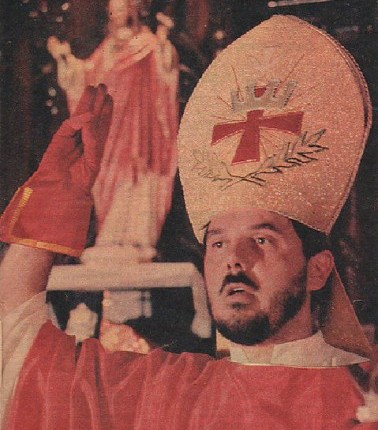
Chester Olszewski from the United States is one of the least known of the modern alternative popes. He was a cradle Catholic who converted to the Episcopalian Church and became a priest. From 1974, he served as a priest in Eddystone, Pennsylvania. In the following year, he became convinced that a statue of the Sacred Heart Christ, owned by a Catholic woman, Anne Poore, bled and bore the stigmata. Olszewski brought the statue to church, where he made it the central devotion.

 Shortly thereafter, Olszewski and Poore claimed to be divinely chosen to restore the traditional Catholic faith; God had converted them to Catholicism. In order to re-establish the true Catholic Church, Olszewski needed to become a bishop and he soon found an independent bishop who provided him with the much sought-after apostolic succession.

On 31 May 1977, Olszewski proclaimed himself Pope Chriszekiel Elias at a ceremony in St. Lukes’s Episcopal Church in Eddystone, alleging that God himself had elected him and provided him with his new name. Later he began to call himself Peter II, the last pope in history.

Here you can read my article on the Pope of Eddystone, Anne Poore, and their church. It’s the first more extensive study on the subject.

Recensioner i Kyrkohistorisk Årsskrift 2020

Recensioner i Kyrkohistorisk Årsskrift 2020

Kyrkohistorisk årsskrift ges sedan år 1900 ut av Svenska kyrkohistoriska föreningen. Varje årgång innehåller vetenskapliga artiklar men inte minst ett stort antal recensioner av kyrkohistoriskt relevant litteratur. Information om hur man blir medlem i föreningen och därigenom erhåller årsskriften finns här

I Kyrkohistorisk årsskrift 2020 bidrar jag med två recensioner:

Marcus Rediker
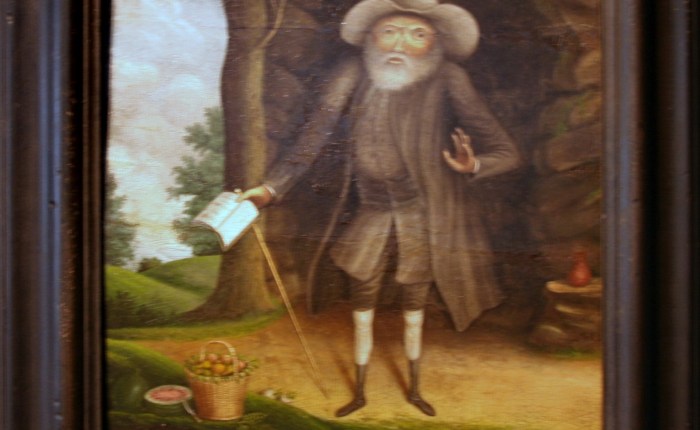
The Fearless Benjamin Lay: The Quaker Dwarf who Became the First Revolutionary Abolitionist
Boston: Beacon Press, 2018, 212 sid.

Stephen J.C. Andes
The Mysterious Sofía: One Woman’s Mission to Save Catholicism in Twentieth-Century Mexico
Lincoln: University of Nebraska Press, 2019, xxiv + 418 sid.

Recensionerna är tillgängliga i fulltext här

Introduction

I’m Magnus Lundberg, Professor of Church and Mission History in the Department of Theology at Uppsala University, Sweden. Through the years, much of my research has focused on colonial Latin American church history. Still, from 2015 onwards, I have devoted much time to the study of Catholic traditionalism, Fringe Catholicism, and New Religious Movements with Catholic roots, especially modern alternative popes (“antipopes”).

On this website, I publish research papers and drafts on topics that interest me. Most articles are in English, but some are in Spanish or my mother tongue, Swedish. Some have been published elsewhere (as books or articles), but they are now available open-access here. Some texts are written exclusively for this site.

Contact: magnus.lundberg@teol.uu.se

For more information on my research and publications, see the “about-section”

For my series of articles on the Palmarian church, see the Palmarian page

For my series of articles on modern alternative popes, see the Pope page

For my series of articles on Giuseppe Maria Abbate, the Celestial Messenger, see the Celestial Messenger Page

For articles and monographs on Latin American church history, see the Church and Mission Studies page

For a great non-academic interest of mine, see the fountain pen pages. This part of the website is in Swedish. Om du är intresserad av äldre pennor är du välkommen att besöka den del av sidan som behandlar reservoarpennor.

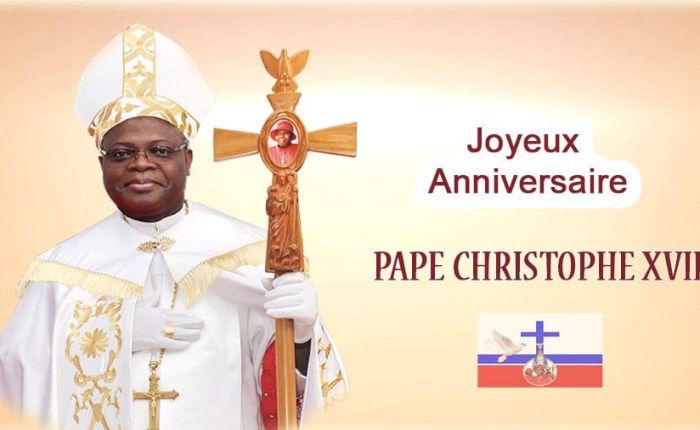
New Study on Pope Christophe XVIII and La Très Sainte Église de Jésus-Christ, Mission de Banamè in Benin

New Study on Pope Christophe XVIII and La Très Sainte Église de Jésus-Christ, Mission de Banamè in Benin

In 2009 Mathias Vigan was a Roman Catholic parish priest in the village of Banamè in south-eastern Benin. In January that year, he met a young woman named Vicentia Tadagbé Tchranvoukinni, whom he exorcised. As she went through the deliverance process, she assumed a new name, Parfaite, claiming increasing charismatic powers and wisdom. Soon, she asserted that she God the Holy Spirit–Dieu Saint-Esprit–also referring to herself as Daagbo.

Daagbo’s End Time mission to extirpate “witchcraft” and crush the Devil’s power; to purify and renew the Catholic Church; and to create peace and prosperity, saving humanity from eternal damnation. By her side was another young woman, Nicole Soglo, whom Daagbo asserted to be the representative of the Virgin Mary on earth: Nanyé Nicole. Mathias Vigan believed in Daagbo’s claims and took an active part in the mission.

In 2011, Daagbo founded a separate church, currently know as La Très Sainte Église de Jésus-Christ, Mission de Banamè–The Most Holy Church of Jesus Christ, Banamè Mission. But in her view, it was nothing new, but the One True Catholic Church, founded by her son Jesus Christ. Eventually, in late 2012 she made Mathias Vigan pope with the name Christophe XVII, and with time the pope, too, received an increasingly divine status as another Jesus.

My research report on La Très Sainte Église de Jésus-Christ, Mission de Banamè is found here.

New Interview with the Palmarian ex-Pope

New Interview with the Palmarian ex-Pope

On February 19, 2020, the Spanish newspaper El Confidencial published a long interview with Ginés Jesús Hernández. Between 2011 and 2016 he was Gregory XVIII, the pope of the Palmarian Catholic Church. In April 2016, he left the papacy and the church and moved to his girlfriend Nieves Triviño, whom he later married. Shortly after leaving El Palmar, he publicly claimed that the church was a hoax (see my summary of the events).

In June 2018, once again the couple made front-page news when the Spanish press reported that they had climbed over the high wall of the church compound in an attempt to rob the very centre of the Palmarian Church: the Basilica in El Palmar de Troya. In a subsequent fight, both two Palmarian bishops and the couple were wounded. Ginés Hernández was very severely injured, being stabbed in the chest. Still, he recovered and both he and his wife were prosecuted for armed robbery. In May 2019, they were sentenced to prison for six and five years respectively, but directly released on probation (see my summary of the events).

Continue reading “New Interview with the Palmarian ex-Pope”

Palmarian Internet Presence

Palmarian Internet Presence

Until very recently the Palmarian Catholic Church had no official internet presence at all. Even for those actively searching, it has been difficult if not impossible to find a phone number or an email address. This was highly unusual even in the world of Catholic traditionalism. Still, in the 1990s, the church maintained a very rudimentary internet site, but it was not updated and eventually disappeared.

In December 2018, however, the Palmarians suddenly launched a professionally looking multilingual website: www.palmarianchurch.org. The site includes basic information about the Palmarian Church, the Order of the Carmelites of the Holy Face and pope Peter III. On the site, one finds a lot of images and films, mainly documenting important religious feast and the basilica in El Palmar de Troya.  There is also a growing number of texts: general overviews of the church’s history and teachings, apparition messages, extracts from official documents (including the catechism and the Palmarian Bible) and hagiographies as well as diatribes against the media and people considered enemies of the church.

Continue reading “Palmarian Internet Presence”

Recensioner i Kyrkohistorisk Årsskrift 2019

Recensioner i Kyrkohistorisk Årsskrift 2019

Kyrkohistorisk årsskrift ges sedan år 1900 ut av Svenska kyrkohistoriska föreningen. Varje årgång innehåller vetenskapliga artiklar, men inte minst ett stort antal recensioner av kyrkohistoriskt relevant litteratur. Information hur man blir medlem i föreningen och därigenom erhåller årsboken finns här.

I Kyrkohistorisk årsskrift 2019 bidrar jag med tre recensioner:

Liesbeth Corens
CONFESSIONAL MOBILITY AND ENGLISH CATHOLICS IN COUNTER-REFORMATION EUROPE.
Oxford: Oxford University Press 2019, xiii + 240 sid.

Nadine Amsler
JESUITS AND MATRIARCHS. Domestic Worship in Early Modern China.
Seattle: University of Washington Press, xii + 258 sid

Chen Hon-Fai

CATHOLICS AND EVERYDAY LIFE IN MACAU. Changing Meanings of Religiosity, Morality and Civility. (Routledge Religion in Contemporary Asia Series 6)

London & New York: Routledge 2017, ix + 196 sid.

Recensionerna är tillgängliga i fulltext här


Kyrkohistorisk forskning i dag och i morgon

Kyrkohistorisk forskning i dag och i morgon

Provföreläsning för professuren i kyrkohistoria, 7 november 2019.

Det förflutna är inte vad det en gång var. Det är titeln på en metodbok av den norske historikern Knut Kjelstadli. Titeln syftar bland annat på att betydelsen av händelser i det förgångna kan förändras med tiden men också på att historieforskningen förändras med tiden.

En annan populär metodbok heter: Fråga det förflutna. Det är vad historieforskning ytterst handlar om. Att vi aktivt förhåller oss till det som skett, eller rättare sagt vad som har blivit kvar av det: det vi benämner källor. Det rör: Vilka frågor vi ställer, vilka källor vi använder och hur vi arbetar med dem, vilka analytiska begrepp vi brukar, hur vi för samman enskildheter till berättelser och teman, och hur vi förklarar orsaker, samband och effekter.

Min föreläsning handlar om nuet och framtiden. Men det är ingen allmän lägesrapport eller någon blick in i en spåkula. Jag ska tala om kyrkohistorisk forskning idag och i den nära framtiden. Och det krävs en ordentlig avgränsning för att kunna säga något vettigt i en kort föreläsning. Därför kommer det att handla om kyrkohistorisk forskning vid Uppsala universitet, där jag sedan fyra år är tillförordnad ämnesföreträdare. Det betyder också att jag är en aktör i skeendet.

Continue reading “Kyrkohistorisk forskning i dag och i morgon”