See my monograph A Pope of their Own: El Palmar de Troya and the Palmarian Church (2nd ed, 2020)
The Palmarian Church in the 21st Century, Part II
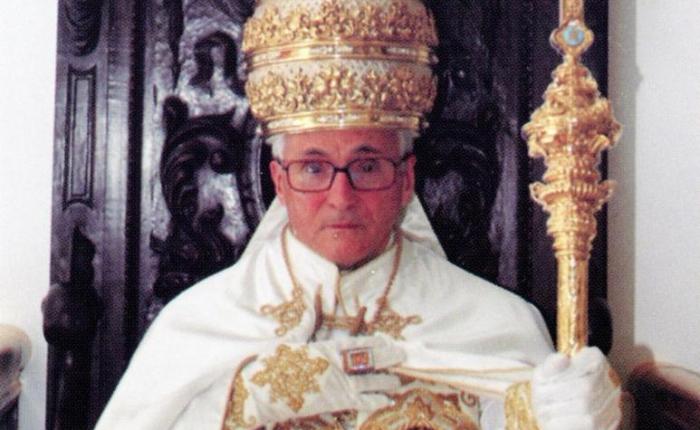
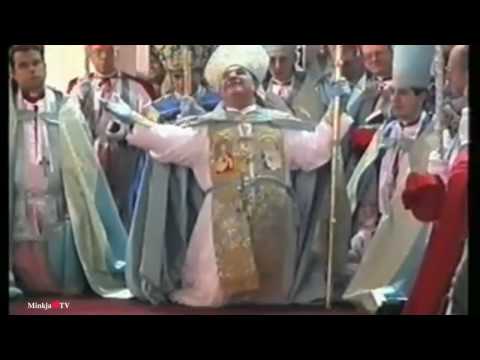
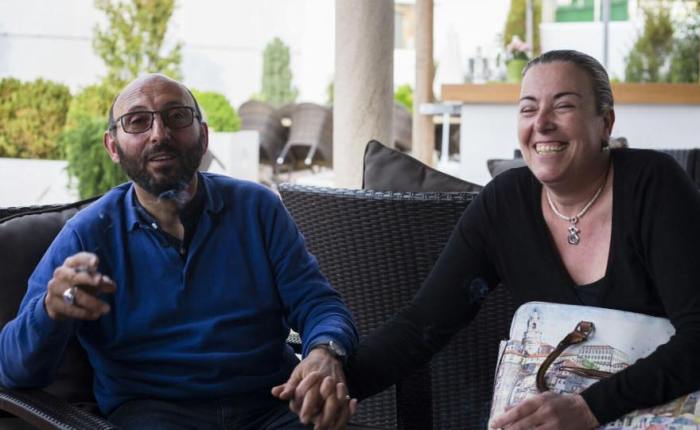
Since news about the 22 of April escape of Pope Gregory XVII from Palmar de Troya was made public by me and others, there have been many articles about the matter in the Spanish press. The combination of a hermetically closed religious group and a pope leaving to live with his girlfriend, claiming that he does not believe in the church teachings anymore is of course thrilling to many, including me.
Below you will find links to some articles from late April and early May that are quite interesting and not too speculative, including several interviews with the ex-pope, who now wants to “turn the page”and leave everything behind him, presenting the Palmarian church as a “set up” (montaje). One month after the departure of Gregory XVII, several Spanish TV channels have broadcast longer documentaries about the history of the Palmarians and the current events.
Early news on the escape of Pope Gregory XVII, ABC Sevilla 25 April 2016: El «papa» de El Palmar de Troya pierde su fe y deja su «orden» sin despedirse de sus seguidores
A history of the Palmarian history and the recent events, including the coronation of the new pope, Peter III, ABC Sevilla 26 April: Los cuatro «papas» del Palmar de Troya
Continue reading “Media Coverage of the Changes in the Palmarian Church”
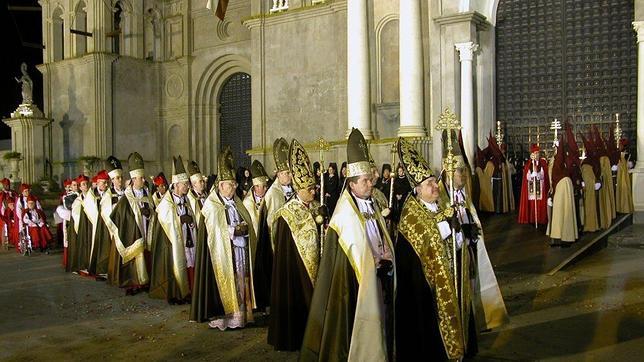
Here is a list of important events in the history of the Palmarian movement that became the Palmarian Catholic Church.
1968 (March 30): Four girls reported having seen a ”very beautiful lady” at the Alcaparrosa field, just outside Palmar de Troya, a town in Spanish Andalusia. The apparition took place by a mastic tree (lentisco), and the woman was identified as the Virgin Mary.
1968 (April onwards): Several other people, most of them women, claimed to have received apparitions at the site. The stories attracted large groups of people from the region, other parts of Spain, and from abroad.
1968 (October 15): Clemente Domínguez Gómez and his friend Manuel Alonso Corral from Seville visited Palmar de Troya for the first time.
1969 (July onwards) Clemente and Manuel began to travel frequently to Palmar de Troya.
1969 (August 15): Clemente fell in ecstasy by the mastic tree.
1969 (September 30): Clemente had his first vision (of Christ and Padre Pio).
1969 (December 15): Clemente had his first vision of the Virgin Mary.
Continue reading “Outline of the History of the Palmarian Movement/Church 1968-2016”
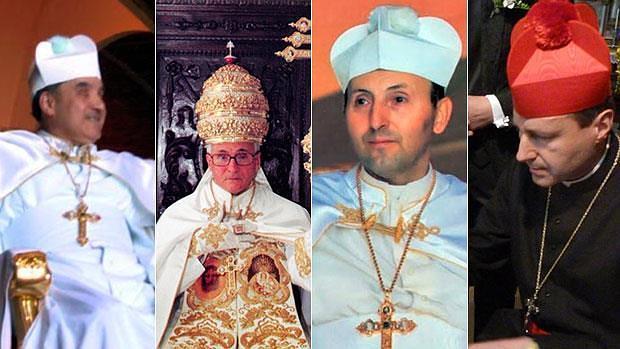
Today, on 22 April 2016, the Palmarian pope Gregory XVIII (2011-2016) resigned. According to my sources of information, he abandoned the church compound without out making a declaration to the faithful. Nevertheless, he left a letter, stating that he “had lost the faith”.
Tomorrow, 23 April the name of the new pope will be announced. In all likelihood, Gregory XVIII will be succeeded by his former Secretary of State, Bishop Eliseo María, a Swiss. See my contribution Unexpected Changes in the Palmarian Church
To be continued …
Habemus Papam! Today, on 23 April 2016, a new pope pope was installed in the Palmarian Church. As expected it is Eliseo María, a Swiss bishop, originally called Markus Josef Odermatt. He has taken the papal name Peter III. According to my informants, he will probably continue the relaxation of the rules, which Gregory XVIII began during the last part of his papacy. This is quite interesting. A Palmarian revolution might be on it’s way.
Continue reading “The Palmarian Pope Has Resigned and is Succeeded by Peter III”
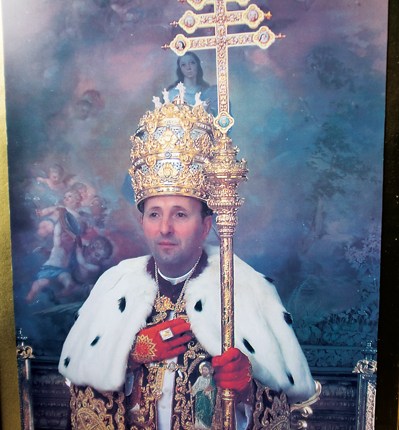
For many years I have devoted much time to research about the Palmarian Church, a traditionalist group with its centre in southern Spain that has roots in the Catholic Church, but which developed increasingly different teachings built on private revelations. For a detailed study, see my research report (2015).
In the last months, there have been unexpected and great changes in this very closed group. The extremely strict dress code for members has been liberalized and there are even reports that nuns, who used to be entirely covered, are not using veils anymore. A truly remarkable development (See documents below).
Continue reading “Unexpected Changes in the Palmarian Church”
Maria Hall
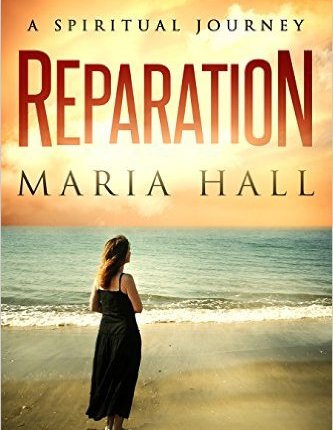
Reparation: A Spiritual Journey
Haven Pablishing, 2015
Maria Hall is from Auckland, New Zealand. After some time in a Roman Catholic order in the late 1970s, she spent eight years as a nun in the Palmarian Church, a religious group which by that time had its hadquarters in Seville and Palmar de Troya in Spanish Andalusia. It is a very closed group with roots in the Roman Catholic Church, which has its own pope and has developed increasingly different teachings. Maria Hall left the Palmarians in 1990. She tells her life story in her new book Reparation: A Spritual Journey, which is the first longer text, written by a former Palmarian nun.
Having read the book, I wrote a message to her, parts of which I publish here:
“I was deeply moved when reading your book: Reparation, a spiritual journey. It is very interesting to see how life can turn out with or without our active choices.
Reading about your time in the Roman Catholic convent, I, of course, recognize the Catholic culture of silence and secrecy, and how relatively little women religious are valued by church authorities.
—
The life in Palmar, as you describe it, feels so claustrophobic. There seemed to be very little charity within the order and a lot of focus on suffering and reparation. Sleep-deprivation, too much or too little food, very hard work, and the enormous amount of prayers and other pious practices make for a very tough life. I also note the almost total invisibility of Pope Gregory, and that Father Isidoro María really was the puppet master Continue reading “Testimony by a former Palmarian nun”
Here is a select bibliography of published works on the Palmarian Catholic Church.
Alonso, Javier & Rafael Canales. 1976. El Palmar de Troya: Festival del integrismo. Madrid: Sedmay Ediciones.
Barrios, Manuel & María Teresa Garrido Conde. 1976. El apasionante misterio del Palmar de Troya. Barcelona: Planeta.
Beltrán y Bachero, José Carlos. 1989. “Unerlaubte bzw. ungültige Priester und Bischofsweihen in El Palmar de Troya.” Pp. 419-433 in Ius et historia: Festgabe für Rudolf Weigand zu seinem 60 Geburtstag. Würzburg: Echter.
Cadoret-Abeles, Anne. 1981. “Les apparitions du Palmar de Troya: Analyse antropologique d’un phénomène religieux.” Mélanges de la Casa de Velázquez 17, 369-378.
Cebolla López, Fermín. 1976. El vidente ciego: Cisma sin teólogos en El Palmar de Troya. Bilbao: Editorial CLA.
Garrido Vázquez, Moisés. 2004. “El Palmar de Troya: 35 años de cisma.” Chapter 6 in El negocio de la Virgen, Madrid: Ediciones Nowtilus.
Garrido Vázquez, Moisés. 2008. “El Palmar de Troya: Cuatro décadas de integrismo mariano”, Misterios y fenómenos insólitos 84, 4-12. Accessed from on 12 August 2015
Gómez Burón, Joaquín & Antonio Martín Alonso 1976. El enigma de El Palmar de Troya, Barcelona: Editorial Personas.
Hall, Maria. 2015. Reparation: A Spiritual Journey, Haven Publishing, 2015.