Palmarian Doctrines, Part III

Palmarian Doctrines, Part III

Josephology

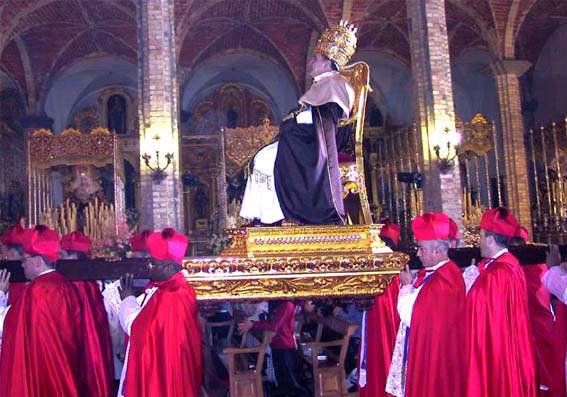
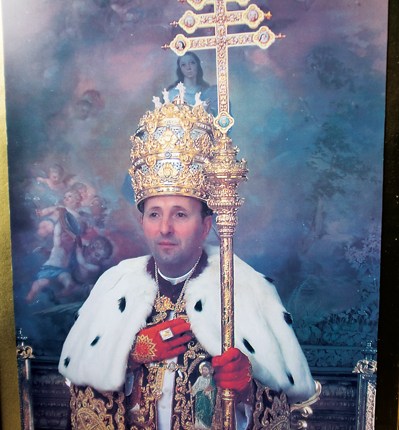
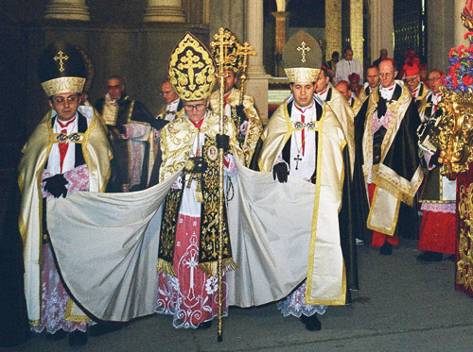
Just as there is a parallelism between Christ and the Virgin in Palmarian theology, there is also a clear parallelism between the Virgin and St. Joseph. Nevertheless, Joseph is subordinated to the Virgin, as she is subordinated to Christ. The Palmarian Josephology is in no way as detailed as its Mariology, but still substantial and detailed, and has a prominent place in its Credo. In one of the first papal documents, promulgated in 1978, it was taught that Joseph was pre-sanctified in the womb of his mother in the third month of his conception. From that time, he was freed from the stain of original sin. Thus, he was born without the ability to commit any sin during his entire existence. Just as the Virgin, he did not have to suffer, as suffering was the effect of the fall, but to help humanity, he chose to do it anyway (CP; DP 3).

Continue reading “Palmarian Doctrines, Part III”

Palmarian Doctrines, Part II

Palmarian Doctrines, Part II

Mariology

If the Roman Catholic Church has made few infallible dogmatic pronouncements, the Palmarian popes have made hundreds, if not thousands. During his first days as the pontiff, Gregory XVII promulgated a series of new Marian dogmas. Many of them had been discussed in the Roman Catholic Church for centuries. In the Early Church, it was taught that the Mary was a (perpetual) virgin and the mother of God (theotokos). Thereafter, it would take a long time before the church made any other binding dogma on the Virgin. In 1854, the Holy See announced a new dogma, the Immaculate Conception, that the Virgin Mary was conceived without the stain of original sin. Finally, in 1950, Pius XII infallibly dogmatized the Assumption of the Virgin: that Mary at her dormition (she did not die) was brought to heaven in body and soul (For a summary on Mariology, see Pelikan 1996; for details, see Marienlexikon 1988-1994).

Continue reading “Palmarian Doctrines, Part II”

Palmarian Doctrines, Part I

Palmarian Doctrines, Part I

Doctrinal Texts

From its foundation in 1978, the Palmarian Church has been very text centered. It has published many documents that can serve as sources for a study of their theology. However, because of the increasingly closed nature of the church, it is not easy to get access to the texts and very little is found in research libraries. They have to be acquired in other, sometimes, complicated ways. Palmarian documents have often been published in parallel English, Spanish and German versions, but there are translations into French, Portuguese, Polish and Italian as well. They give evidence of a successive doctrinal development from a rather typical, though clearly apocalyptically-centered Catholic traditionalism, to a very different belief system.

Continue reading “Palmarian Doctrines, Part I”

Outline of the History of the Palmarian Movement/Church 1968-2016

Outline of the History of the Palmarian Movement/Church 1968-2016

Here is a list of important events in the history of the Palmarian movement that became the Palmarian Catholic Church.

1968 (March 30): Four girls reported having seen a ”very beautiful lady” at the Alcaparrosa field, just outside Palmar de Troya, a town in Spanish Andalusia. The apparition took place by a mastic tree (lentisco), and the woman was identified as the Virgin Mary.

1968 (April onwards): Several other people, most of them women, claimed to have received apparitions at the site. The stories attracted large groups of people from the region, other parts of Spain, and from abroad.

1968 (October 15): Clemente Domínguez Gómez and his friend Manuel Alonso Corral from Seville visited Palmar de Troya for the first time.

1969 (July onwards) Clemente and Manuel began to travel frequently to Palmar de Troya.

1969 (August 15): Clemente fell in ecstasy by the mastic tree.

1969 (September 30): Clemente had his first vision (of Christ and Padre Pio).

1969 (December 15): Clemente had his first vision of the Virgin Mary.

Continue reading “Outline of the History of the Palmarian Movement/Church 1968-2016”

The Palmarian Pope Has Resigned and is Succeeded by Peter III

The Palmarian Pope Has Resigned and is Succeeded by Peter III

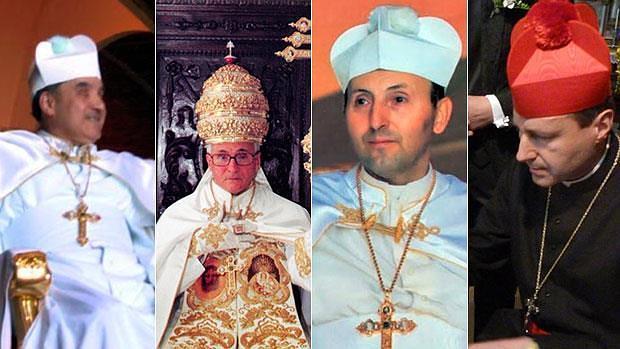
Today, on 22 April 2016, the Palmarian pope Gregory XVIII (2011-2016) resigned. According to my sources of information, he abandoned the church compound without out making a declaration to the faithful. Nevertheless, he left a letter, stating that he “had lost the faith”.

Tomorrow, 23 April the name of the new pope will be announced. In all likelihood, Gregory XVIII will be succeeded by his former Secretary of State, Bishop Eliseo María, a Swiss. See my contribution Unexpected Changes in the Palmarian Church

To be continued …

Habemus Papam! Today, on 23 April 2016, a new pope pope was installed in the Palmarian Church.  As expected it is Eliseo María, a Swiss bishop, originally called Markus Josef Odermatt. He has taken the papal name Peter III. According to my informants, he will probably continue the relaxation of the rules, which Gregory XVIII began during the last part of his papacy. This is quite interesting. A Palmarian revolution might be on it’s way.

Continue reading “The Palmarian Pope Has Resigned and is Succeeded by Peter III”

Unexpected Changes in the Palmarian Church

Unexpected Changes in the Palmarian Church

For many years I have devoted much time to research about the Palmarian Church, a traditionalist group with its centre in southern Spain that has roots in the Catholic Church, but which developed increasingly different teachings built on private revelations. For a detailed study, see my research report (2015).

In the last months, there have been unexpected and great changes in this very closed group. The extremely strict dress code for members has been liberalized and there are even reports that nuns, who used to be entirely covered, are not using veils anymore. A truly remarkable development (See documents below).

Continue reading “Unexpected Changes in the Palmarian Church”

Martin de Porres: Ras och helighet i kolonialtid och nutid

Martin de Porres: Ras och helighet i kolonialtid och nutid

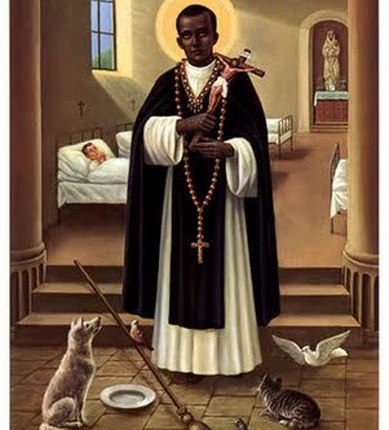
I många katolska kyrkor runt om i världen kan man se bilder och statyer av en mörkhyad man, med en kvast i handen, och klädd i svart och vit dräkt. Vid sidan om honom finns ofta en katt, en hund och en råtta som äter ur samma skål. Nedanför statyn har människor lämnat kvar brev, bilder och föremål, som tack för att de eller deras anhöriga har tillfrisknat med hans hjälp. Medaljer med hans bild är populära, liksom barnböcker, målarböcker och serietidningar. Mannen är det peruanska helgonet Martín de Porres (1579-1639), en dominikansk lekbroder som levde större delen av sitt liv i Lima. Men hans väg till helgonskap var lång. Undersökningarna av hans helighet inleddes strax efter hans död, men han blev inte kanoniserad förrän 1962.

Continue reading “Martin de Porres: Ras och helighet i kolonialtid och nutid”

Johnsonkoncernen i Latinamerika V: Fundación Johnson, Buenos Aires

Johnsonkoncernen i Latinamerika V: Fundación Johnson, Buenos Aires

1943 donerade generalkonsul Axel Ax:son Johnson 200 000 kronor till grundplåten för en stiftelse, som hade till uppgift att bygga ett sjömanshem i Buenos Aires för svenska sjömän som under kortare eller längre perioder vistades i Argentina. Stiftelsen, som grundades den 21 juli 1943, kallades Fundación Johnson. Enligt statuterna skulle stiftelsens uppgift vara “att lämna moraliskt och materiellt stöd i mesta möjliga mån inom tillåtna gränser till de sjömän av svensk nationalitet, som anlända till argentinska hamnar, varför ett Hem skall bildas, till vilka dessa kunna komma för att erhålla ovannämnda fördelar”

Enligt statuterna skulle Fundación Johnson ledas av en styrelse bestående av: a) Sveriges minister i Argentina, ordföranden för Svenska föreningen i Buenos Aires och ordföranden för Svenska hjälpföreningen i Buenos Aires; b) en representant för Johnson Line, som skulle väljas av stiftelsen grundare och hans efterträdare; samt c) tre till fem personer som valdes  genom omröstning.

Continue reading “Johnsonkoncernen i Latinamerika V: Fundación Johnson, Buenos Aires”

Alonso de la Mota y Escobar, Obispo de Puebla

Alonso de la Mota y Escobar, Obispo de Puebla

 “Alonso de la Mota y Escobar: Ambición y santidad en la Nueva España, Siglos XVI y XVII”

Magnus Lundberg

Publicado in: Lillian von der Walde & Mariel Reinoso (eds.), Virreintos II, México: Editorial Grupo Destiempos, 2013

Hijo de conquistador, nacido en la ciudad de México, Alonso de la Mota y Escobar (1546-1625) hizo una carrera eclesiástica encomiable durante las últimas décadas del siglo XVI y primeras del XVII. Con una movilidad poco común, ocupaba puestos altos en cuatro de las diócesis novohispanas: Michoacán, México, Guadalajara y Puebla, primero como deán, después como obispo, siendo por ende el primer criollo novohispano elevado al rango episcopal.

Aparte de un breve epílogo, este estudio se divide en cuatro partes: la primera se centrará en los lazos familiares de Mota y su formación académica, hasta su ordenación sacerdotal; en la segunda parte examinaremos su carrera eclesiástica en tres cabildos eclesiásticos. El propósito de la tercera parte es estudiar su promoción a varios episcopados y su tiempo como obispo de Guadalajara y Puebla, particularmente sus visitas eclesiásticas, mientras que el objetivo de la última parte pretende analizar los elogios póstumos al obispo, donde se presenta como un prelado ideal y aún como un santo. Rasgos de la biografía de Mota y Escobar y  su obra aparecen en algunas obras antiguas y modernas, pero aparte de unas excepciones reseñables, como las investigaciones de John Frederick Schwaller, mucho de lo que se ha escrito incluye errores y aserciones sin mucho fundamento. Por ello, merece la pena hacer un estudio más detallado de este interesante personaje.

Available as e-book

Magnus Mörner

Magnus Mörner

“Conversación con Magnus Mörner”

Carlos Contreras & Magnus Lundberg 

Publicado en Histórica, vol. XXXII:2 (2008)

Una entrevista de 2009 con el destacado historiador sueco Magnus Mörner (1924-2012), conocido internacionalmente por sus muchos estudios latinoamericanistas.

El artículo completo se encuentra aquí.

See also my obituary in Hispanic American Historical Review 92:4 (2012) here

Requiescat in pace