Text of the Palmarian Catechism

Text of the Palmarian Catechism

One of the most important sources for the study of the teachings of the Palmarian Catholic Church is their catechism. Those who consult the book will find doctrines that have much in common with traditional Roman Catholicism, but also very different teachings. Throughout the years, the church has published many versions of the catechism, including basic, intermediate and superior levels. Below you will find a scanned version of Palmarian Catechism: Superior Grade, which was promulgated by Pope Peter III (Markus Josef Odermatt; Fr. Eliseo María) on June 29, 2016. The book was published by the Secretariat of His Holiness, El Palmar de Troya in 2016.

Palmarian Catechism-part 1

Palmarian Catechism-part 2

To read more about Palmarian doctrine and the history of the church, see my new book, A Pope of Their Own, which is downloadable here

Documents of Palmarian Pope Peter II

Documents of Palmarian Pope Peter II

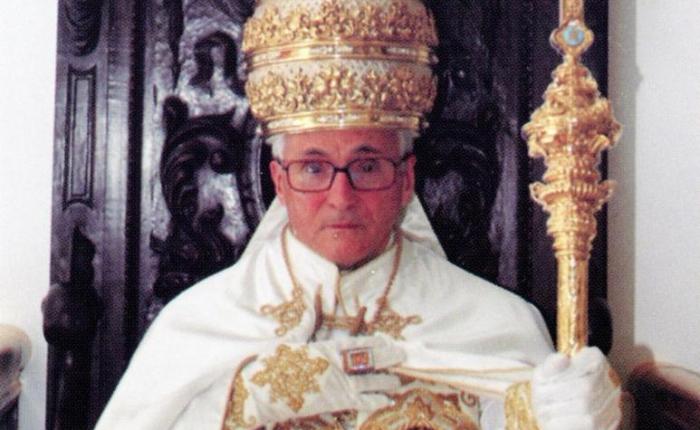
In 2005, Manuel Alonso Corral (Fr. Isidoro María) succeeded Gregory XVII (Clemente Domínguez Goméz) as pope of the Palmarian Catholic Church. He took Peter II as his papal name. Manuel Alonso and Clemente Domínguez had been friends since 1969, and Manuel was an important organizer of the movement that followed in the steps of the alleged apparitions to Clemente: the foundation of a religious order, the consecration of bishops, and, finally, in 1978, the founding of the Palmarian church and the proclamation of Clemente Domínguez, as the true pope.

Below you will find scanned versions of all the 30 apostolic letters that Peter II issued during his pontificate (2005-2011).

Peter II apostolic letters 1-10

Peter II apostolic letters 11-20

Peter II apostolic letters 21-30

For a study of the pontificate of Peter II and on the general history of the Palmarian Church, please see my new book, A Pope of Their Own, which is downloadable here.

Documents of Palmarian Pope Gregory XVIII

Documents of Palmarian Pope Gregory XVIII

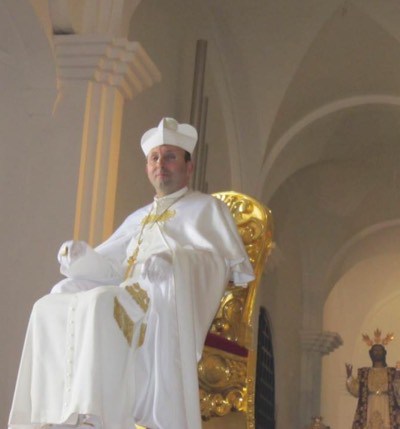
Gregory XVIII (Ginés Jesús Hernández; Fr. Sergio Maríawas the pope of the Palmarian church between 2011 and 2016. He was the third Palmarian pope, who succeeded Gregory XVII (1978-2005) and Peter II (2005-2011).  In April 2016, he left the papacy and the church.

Below you will find scanned versions of Gregory’s seven encyclicals and a number of apostolic decrees and other documents. Most of the texts are in English. Some are in German.

Gregory XVIII: Encyclicals 2011-2016

Gregory XVIII: Apostolic decrees, etc.

For more information on the Palmarian church and the papacy of Gregory XVIII, see my new book, A Pope of Their Own which is downloadable here.

Documents of Palmarian Pope Peter III

Documents of Palmarian Pope Peter III

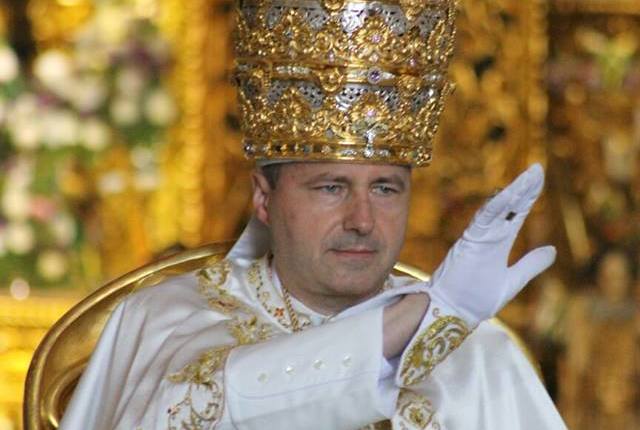
On April 23, 2016, Pope Gregory XVIII left the Palmarian papacy and the church. He was succeeded by Bishop Eliseus Mary of the Holy Face and of Saint Joseph (Markus Josef Odermatt), who took Peter III as his papal name. In 2016, the new pope published a number of official documents, including four apostolic letters and several apostolic decrees. Below you will find scanned versions of the documents. Some of them are in German. Others are in English.

Update: I have been able to upload the sixth apostolic letter, issued in June 2017

Peter III: Apostolic letters 2016

Peter III: Apostolic decrees 2016

Peter III: Apostolic letter June 2017:

Continue reading “Documents of Palmarian Pope Peter III”

Det excentriska är centralt

Det excentriska är centralt

Magnus Lundbergs installationsföreläsning som professor i kyrko- och missionsstudier vid Uppsala universitet, 15 november 2016.


Är detta inte själva sinnebilden av excentricitet? En engelsk gentleman i tredelad kostym som har kommit på idén att använda 17 meter exklusiv harristweed för att klä en häst på samma sätt. Här betecknar excentriskt det lätt bisarra, men acceptabla, som företrädesvis görs av brittiska män med gamla pengar. Det är kanske framförallt familjenamnet som skiljer excentrikern från byfånen. Personer–mänskliga eller icke-mänskliga–i tredelad kostym ska dock inte lägga beslag på ordet. Tweed är inget nödvändigt eller tillräckligt kriterium för excentricitet.

Continue reading “Det excentriska är centralt”

Gustaf Knös och hans värld

Gustaf Knös och hans värld

Gustaf Knös (1773–1828) var i tur och ordning professor i grekiska och österländska språk i Uppsala, men också verksam som församlingspräst och swedenborgskt övertygad författare. Mot slutet av sitt liv sammanfattade han sina teologiska grundidéer i en bok med den fantasieggande titeln Samtal med mig sjelf om werlden, menniskan och Gud (1824), som efter en kritisk recension följdes upp av den dubbelt så omfattande skriften Försök att utreda några wiktiga frågor (1827).

Min artikel är emellertid ingen ingående studie av Gustaf Knös som teolog. Fokus här ligger istället på Gustaf Knös utbildning studier och hans verksamhet som vetenskapare, främst som orientalist. Dessutom behandlar jag kärleken i hans liv. Huvudkällorna är brev och dagboksanteckningar, men också andra dokument, inte minst ansökningshandlingarna till professurerna är väsentliga.

Fulltext

Book on the Palmarian Church

Book on the Palmarian Church

EDIT: The second edition of the book, published in 2020, is available here.

My book on the Palmarian Church is available online.

Lundberg, Magnus. A Pope of Their Own: Palmar de Troya and the Palmarian Church.

Series: Uppsala Studies in Church History, volume 1.

Uppsala: Uppsala University, Department of Theology, 2017.

ISBN 978-91-984129-0-1

Full-text is available here

Abstract: A Pope of Their Own

Continue reading “Book on the Palmarian Church”

Recensioner i Kyrkohistorisk Årsskrift 2014-2016

Recensioner i Kyrkohistorisk Årsskrift 2014-2016

Under det senaste decenniet har jag skrivit en lång rad bokrecensioner i Kyrkohistorisk årsskrift. De flesta av dem handlar om latinamerikansk kyrkohistoria, men några rör Asien och Oceanien. KÅ, som ges ut av Svenska kyrkohistoriska föreningen, är nu inne på sin 116:e årgång, och dess recensionsavdelning har länge varit ett måste för den som vill hålla sig uppdaterad om kyrkohistorisk forskning. På föreningens hemsida är de senaste årens skrifter tillgängliga i fulltext. Där finns också information om hur man blir medlem. Här kan du läsa de elva recensioner jag publicerade i KÅ mellan 2014 och 2016:

Celia Cussen, Black Saint of the Americas: The Life and the Afterlife of Martín de Porres, Kyrkohistorisk årsskrift 116 (2016). PDF

Continue reading “Recensioner i Kyrkohistorisk Årsskrift 2014-2016”

Modern Alternative Popes 24: Argentinean Pedro Segundo

Modern Alternative Popes 24: Argentinean Pedro Segundo

Segundo Ubaldo Rolón (Pedro Segundo, 2007-2016). In some respects, this Argentinean papal claimant is a rather typical representative for the mystically elected alternative popes. Marian apparitions played an important role for his claim as well as the assertion that humanity lives in the End Time. He had a clear focus on the events described in the Book of Revelation and their application to the present era. Still, the symbiosis between religion and politics–in this case, a form of “Transcendent Peronism”–makes it quite unique.

Continue reading “Modern Alternative Popes 24: Argentinean Pedro Segundo”

Modern Alternative Popes 23: Colombian Pedro II

Modern Alternative Popes 23: Colombian Pedro II

Antonio José Hurtado (Pedro II, 1939-1955) was a Colombian, self-trained dentist. After the death of Pope Pius XI in 1939, he proclaimed himself Pope Peter II, stating that he was elected by God. Hurtado’s claim to the papacy only ended with his death in 1955. Thus, his papal claim had nothing to do with the reforms in the Roman Catholic Church in the 1960s. The following text is not built on a detailed study of primary sources but mostly relies on secondary material, including some fine articles about this intriguing man (see list of references).

The future pope was born in 1892 in the small town of Barbosa, some 40 kilometres north of Medellín. As a young man, he studied at the Thomas Aquinas Seminary in Santa Rosa de Osos but left when his father died. Hurtado seems to have had great entrepreneurial skills and he was a quick learner. He moved to Bogotá, where he worked in many different areas without having formal training in any of them. Among other things, he became a carpenter, a tailor, a goldsmith and an ambulating photographer.

Continue reading “Modern Alternative Popes 23: Colombian Pedro II”