Modern Alternative Popes 23: Colombian Pedro II

Modern Alternative Popes 23: Colombian Pedro II

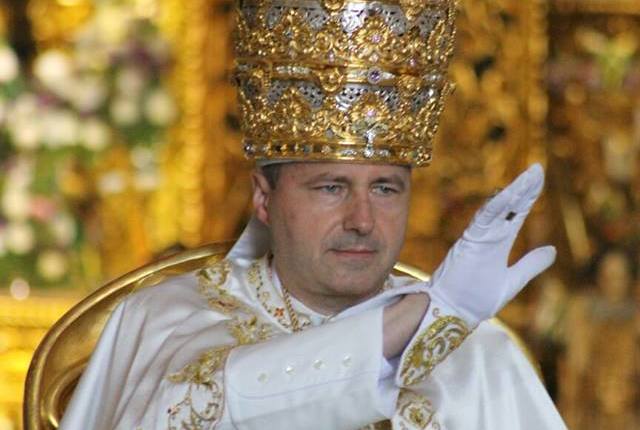
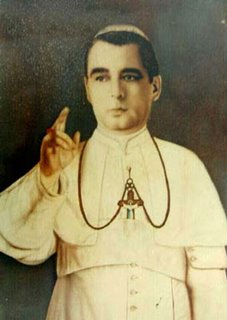
Antonio José Hurtado (Pedro II, 1939-1955) was a Colombian, self-trained dentist. After the death of Pope Pius XI in 1939, he proclaimed himself Pope Peter II, stating that he was elected by God. Hurtado’s claim to the papacy only ended with his death in 1955. Thus, his papal claim had nothing to do with the reforms in the Roman Catholic Church in the 1960s. The following text is not built on a detailed study of primary sources but mostly relies on secondary material, including some fine articles about this intriguing man (see list of references).

The future pope was born in 1892 in the small town of Barbosa, some 40 kilometres north of Medellín. As a young man, he studied at the Thomas Aquinas Seminary in Santa Rosa de Osos but left when his father died. Hurtado seems to have had great entrepreneurial skills and he was a quick learner. He moved to Bogotá, where he worked in many different areas without having formal training in any of them. Among other things, he became a carpenter, a tailor, a goldsmith and an ambulating photographer.

Continue reading “Modern Alternative Popes 23: Colombian Pedro II”

Media Coverage of the Palmarian Church, April-September 2016

Media Coverage of the Palmarian Church, April-September 2016

Since news about the 22 of April escape of Pope Gregory XVIII from Palmar de Troya was made public by me and others, there have been many articles about the matter in the Spanish press. The combination of a hermetically closed religious group and a pope leaving  to live with his girlfriend, claiming that he does not believe in the church teachings anymore is of course thrilling to many, including me.

Below you will find links to a selection of articles published from late April onwards. Many are quite interesting and not too speculative, including several interviews with the ex-pope, who now wants to “turn the page”and leave everything behind him, presenting the Palmarian church as a “scam” (montaje).

By May 2016, one month after the departure of ex-pope Gregory from Palmar de Troya, several Spanish TV channels have broadcast longer documentaries about the history of the Palmarians and the current events.

Continue reading “Media Coverage of the Palmarian Church, April-September 2016”

Podcast Iglesia Palmariana 1

Podcast Iglesia Palmariana 1

Descripción de El Palmar de Troya: La historia del nacimiento de una Iglesia.

Modern Alternative Popes 10: The Missionary Order for the Salvation of Souls

Valeriano Vestini (Valerian I, 1990-1995) was born Olinto Vestini, taking the name Valeriano when he joined the Capuchin order. He later became superior of the Mater Domini monastery in Chieti. In 1983, a local woman called Rita claimed to have dreams which featured Vestini as a representative of Padre Pio. The dreams included a divine command: that the group around her should work for the salvation of souls, joining forces with the seers of Lourdes, Fatima and Medjugorje. Rita left the group in 1989, and the role as the voice-box of heaven was taken over by Nicola Di Carlo and Alessandro Di Donato.


Continue reading “Modern Alternative Popes 10: The Missionary Order for the Salvation of Souls”

Modern Alternative Popes 4: The Legio Maria

Modern Alternative Popes 4: The Legio Maria

Without any doubt, the Legio Maria, founded in Kenya in the early 1960s, is the largest of the churches in this overview. Although it is very difficult to estimate the numbers of followers, some researchers state around one million followers, while some give even higher estimates. During its existence, it has had at least three popes. The founder, Simeo Ondeto could be included, too, but he was also considered the Messiah, and today they are two claimants to the Legio Maria papacy.

Continue reading “Modern Alternative Popes 4: The Legio Maria”

Modern Alternative Popes 2: Apostles of Infinite Love, France

Modern Alternative Popes 2: Apostles of Infinite Love, France

The relations between the popes related to the Apostles of Infinite Love is a complicated matter. The first pope, Clement XV, asserted that he from 1950 onwards assisted Pius XII and that he continued to support John XXII under his pontificate. To him, both Pius and John were true popes, though enemies in the Curia hindered them from acting freely. In short, they needed help from Pope Clement.

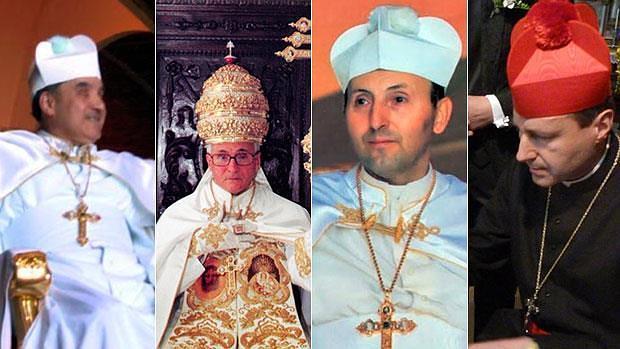
First with the election of Paul VI, in 1963, Clement claimed that he was the only true pope, moving the Holy See to Clémery, the small French town where he lived. In the late 1960s and early 1970s, the Apostles were divided into several groups, and a Canadian cardinal declared that he had been divinely chosen to replace the founder and took the name (John) Gregory XVII. Several other splinter groups appeared, and after Clement’s death in 1974, at least two other men have claimed to be his papal successor. Continue reading “Modern Alternative Popes 2: Apostles of Infinite Love, France”

Modern Alternative Popes 1: Introduction

Modern Alternative Popes 1: Introduction

This is the first of 24 posts on post-World War II alternative popes (“antipopes” from the perspective of the Roman Catholic Church). Here I give an overview of different kinds of post-Vatican II traditionalist groups, including sedevacantists, who believe that the pope in Rome is not the true pope. I also discuss two types of alternative popes: those who claim supernatural election (“mystically elect”) and those who have been chosen in some type of conclave (“conclavists”). This post will be a useful introduction to the following 20 posts on different alternative popes and religious groups.

Continue reading “Modern Alternative Popes 1: Introduction”